How Pilgrim's Hospices Collects 4,800 Christmas Trees in a Weekend

How a UK hospice charity coordinates 50 volunteer drivers to collect nearly 5,000 Christmas trees across East Kent, raising £78,000 for patient care.
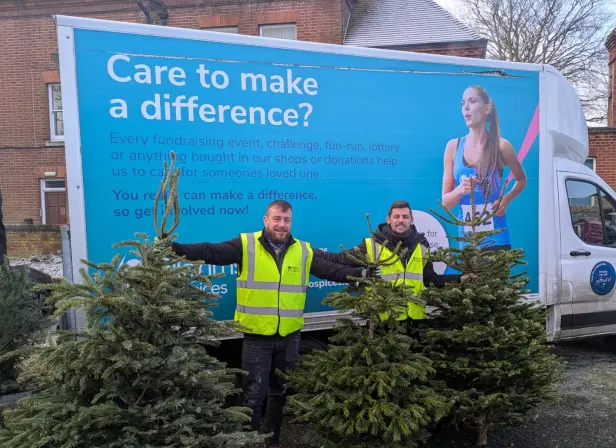
- Route optimization works for collection, not just delivery: The same software that plans delivery routes can coordinate large-scale pickup operations.
- Volunteer fleets require flexible planning: When you don't know your vehicle lineup until the morning of, you need systems that can adapt quickly.
- Split operations by area: Running three separate route plans — one for each site — made coordination much simpler.
- Print backup routes: Not all volunteers are comfortable with apps, and connectivity can fail in rural areas. Paper backups are essential.
- Mission drives participation: Volunteers often have personal connections to the hospice, which turns a logistics task into something meaningful.
Before route optimization software, Pilgrim's Hospices’ Christmas tree recycling campaign was planned with pen, paper, and maps.
“We had a lovely volunteer who used to do it all by hand,” says Billy Williams, Events Manager at Pilgrim's Hospices. “Logistically it was a feat of engineering. I can’t imagine how anybody managed to do it.”
Today, with the help of Routific delivery management software, that same campaign has grown into one of the hospice's largest volunteer mobilizations. In January 2024, 50 volunteer drivers collected over 4,800 Christmas trees across East Kent in a single weekend, raising £78,000 for patient care.
“Live as well as you can, for as long as you can”
Pilgrim's Hospices has three sites in East Kent in the UK: Canterbury, Thanet, and Ashford. It provides end-of-life care, and a lot more: wellbeing support groups, art-based therapy, carers' walking groups, in-house counseling, and a hospice-at-home service where nurses visit patients in their homes.
“There's a lot of stigma around hospice care,” Williams explains. “People think it's just a place you go when you die, but it's actually so much more than that. When people get diagnosed with a life-limiting illness, it can be quite isolating, so bringing people together with shared experience is really important. It can provide a real sense of community — not just for people diagnosed with a life-limiting illness, but for family members too.”
The hospice promotes a philosophy of “live as well as you can, for as long as you can”. As Williams puts it: “Being given a diagnosis of a life-limiting illness is not the end — for lots of people, it can be the beginning of a new chapter.”
The challenge of funding a £17 million a year non-profit
That high level of individual, family and community care doesn’t come cheap. Pilgrims Hospice is a large operation with a budget of over £17 million a year.
“We get around 20% from the government,” says Williams. “The rest we have to raise ourselves. So £78,000 for tree recycling is a huge amount of money.”
The hospice runs other major events and challenges throughout the year, from old-school jumble sales, through marathons, fun-runs and hikes, to a trip to Everest Base Camp.
In 2025 the annual cycle challenge raised over £150,000, and the Pilgrim's Way Challenge broke records at £196,000.
Most of the volunteers and participants have a personal connection to the hospice. “A lot of people who sign up are families who’ve lost loved ones at the hospice,” says Williams. “They have that connection, and it continues on.”
Tree recycling: a growing campaign
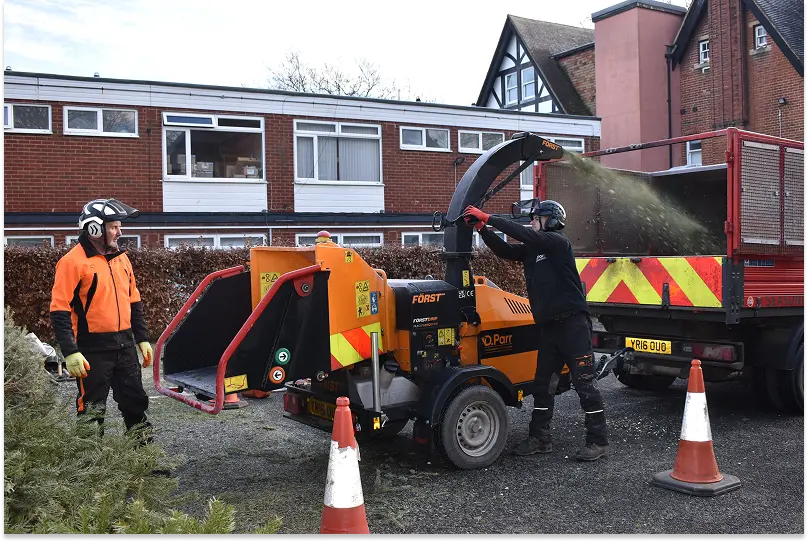
Tree recycling has become a significant fundraiser for UK charities, and Pilgrim's Hospices runs one of the larger operations. There's no charge for collection — the hospice simply asks for a donation, and people give what they can.
“Generally people are very generous,” Williams notes. “In East Kent, the hospice has a very good reputation and has built a strong sense of community over the years. The turnout for tree recycling is really big and continues to grow year on year.”
The collected trees get chipped and recycled. “We use a lot of the chippings on our own hospice grounds and gardens, then it gets filtered out to various places as fertilizer,” Williams explains. The hospice also promotes the environmental benefit: recycling trees saves significant CO2 compared to landfill disposal.
Using delivery software for Christmas tree collection
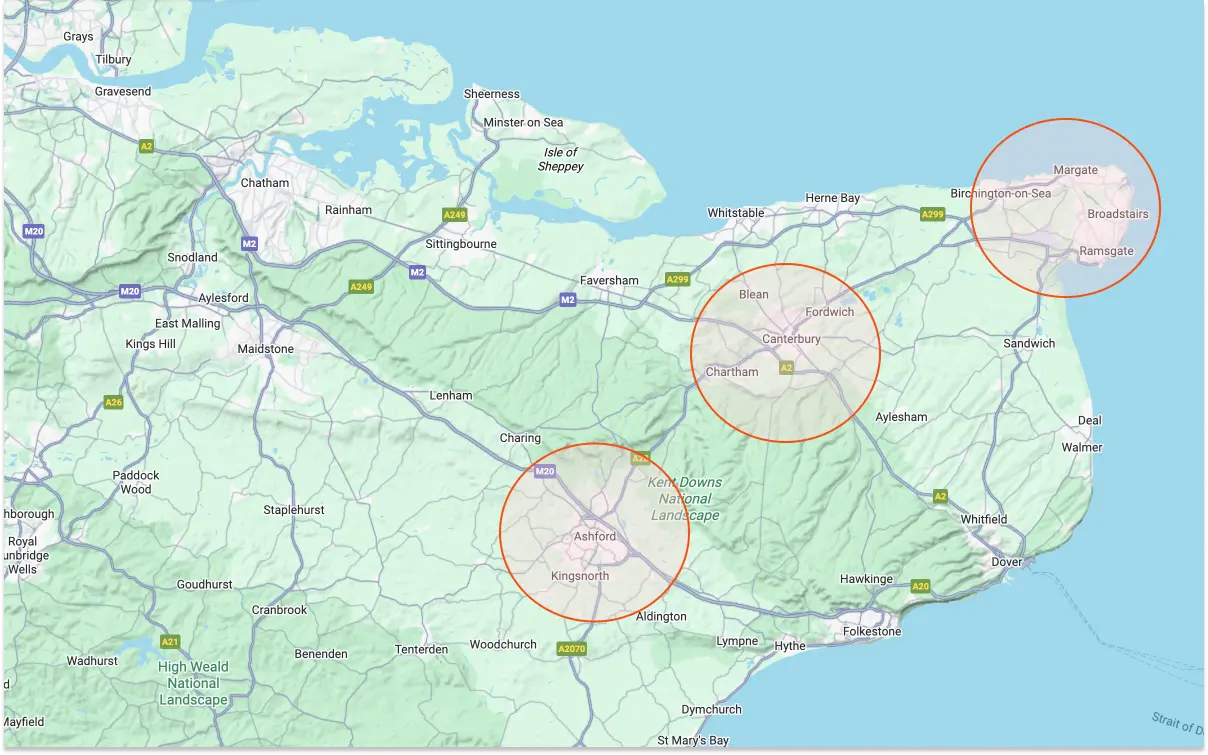
Pilgrim's Hospices uses Routific delivery route software to plan its Christmas tree pickup routes. With 5,000 trees and around 50 mostly volunteer drivers to co-ordinate, it’s a big task.
Planning is complicated by the fact that not much can be done in advance. “People can register for their tree collection all the way up until early January,” says Williams. “Before Christmas, the team secures all the volunteer and vehicle information, then I put all that into a master spreadsheet before we break up for the Christmas period. Then once we close registrations, we can sort the address data and get it ready for upload to Routific. We have to make sure data is segmented correctly for the right locations across East Kent.”
Routific automatically creates efficient routes for all the addresses. Williams and his team can then assign drivers to each route, and dispatch them using the free Routific mobile app so drivers can easily follow their routes.
Managing a volunteer fleet
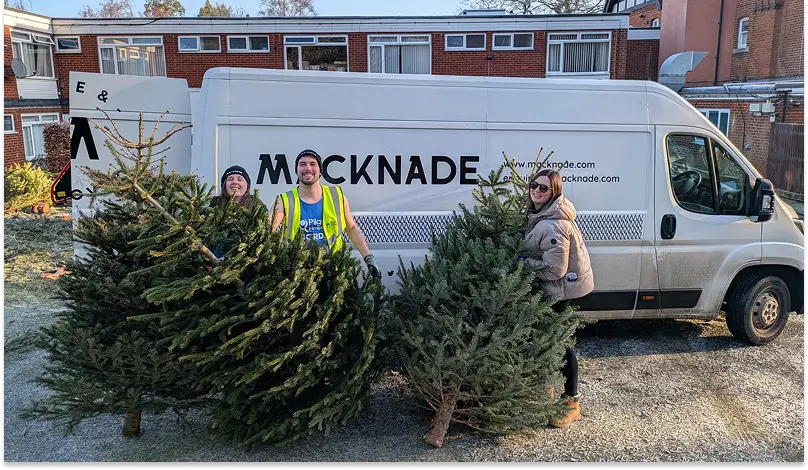
Routific’s flexibility is especially useful because unlike commercial delivery operations, Pilgrim's Hospices can't predict their exact fleet composition until collection day. Corporate partners donate vehicles and crews, but commitments often finalize at the last minute.
“We don't know until very close to the time how many vehicles we'll have, and what load each vehicle can carry,” Williams explains.
The vehicle mix typically includes:
- Lutons (box trucks): These can fit up to 40 trees at a push.
- Medium transit vans: Lower capacity but more maneuverable on country lanes.
- Corporate vehicles: Flatbeds, long-wheelbase transits, open-top vehicles — whatever teams can bring.
- Hired vans: Backup capacity when corporate partners offer crews but not vehicles.
Tree size adds complexity. “Even though we tell people to chop trees over eight feet in half, a lot of times they don’t,” Williams notes. This limits how many trees fit per trip, requiring multiple runs back to chipping stations.
Routific allows Williams and his team to specify vehicle sizes and load capacities, making it possible to plan accurate routes.
Day-of coordination
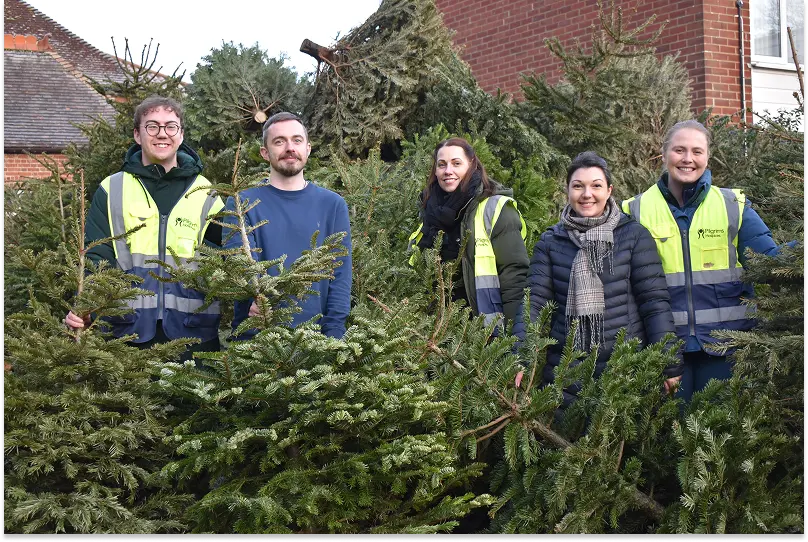
The morning of collection requires rapid coordination. Williams describes the process:
“Because we don't know what drivers we're going to get until sometimes on the day, we leave the phone number empty when we upload the spreadsheet data to Routific. On the morning, we have a super user on each site. All the teams and crews come in, give us their navigator's telephone number, we input that, and then send the route to the mobile so they have the step-by-step route.”
Williams has driven routes himself. “The way Routific plots it is fantastic,” he says. “Some of the areas are really rural, and volunteers would come back saying ‘Wow, that was amazing.’”
The team also prints paper routes as backup for the mobile app. “Some volunteers aren't tech-savvy, and connectivity can go down in remote countryside areas. All the paper gets recycled afterward.”
Each site also has a dedicated phone number for missed collections — people who forgot to put their tree out, or whose tree was missed for some reason.
Results by site:
- Ashford: This site typically has a big team of volunteers and gets all the collections done on the Saturday.
- Thanet: This coastal area usually manages to complete all its collections on Saturday and Sunday.
- Canterbury: With more people in a concentrated area, and some challenging roads, Canterbury takes longest, with some collections spilling into the next week.
Lessons for large-scale collection operations
Pilgrim's Hospices' tree recycling campaign offers insights for any organization coordinating volunteer-based collection:
- Route optimization works both ways: Software designed for delivery handles pickup operations with minimal adaptation.
- Geographic segmentation simplifies coordination: Splitting operations by region allows parallel execution and clearer accountability.
- Variable fleets need flexible systems: When you can't predict vehicles until the last minute, build processes that accommodate uncertainty.
- Paper backup isn't obsolete: For volunteer operations, printed routes provide essential redundancy.
- Mission drives participation: People will volunteer for logistics when they understand the impact.
Frequently Asked Questions

The 10 Best Free Route Planners In 2026

Delivering Holiday Comfort With The LeBron James Family Foundation