
How To Launch A Profitable Meal Prep Delivery Business

Starting a meal prep business means mastering two things: great food and efficient delivery. Here's your blueprint for building both profitably.

- The meal prep market is growing fast. Meal kits alone are projected to hit $97.47 billion by 2033.
- Choose your model carefully: Ready-made meals vs. meal kits have very different operational and delivery implications.
- Scheduled deliveries beat on-demand: Batch orders and optimize routes to keep delivery costs manageable while meeting customer expectations.
- Route optimization software cuts costs 20-30% by calculating the most efficient delivery routes automatically.
- Start small and scale systematically: Move from home kitchen to commercial space only when your business model is proven.
- Marketing matters: Build a strong online presence through SEO, social media, and email to attract and retain customers.
If you have an entrepreneurial mindset and a passion for food, starting a meal prep company is a business idea worth considering. Here’s why:
- There’s a clear and attractive target market. Many people work long hours and are stressed out: They love the idea of healthy home cooking and fresh food, but they don’t have energy or time for detailed menu planning, shopping, and meal preparation. These are your potential customers.
- There’s an opportunity to build recurring revenue.
- It avoids the hassle involved in running a restaurant. You don’t have to pay rent for a dining room in a commercial location, hire and manage serving staff, get a liquor license, or accommodate special dietary needs — unless you want to!
What the numbers say about the growing demand for meal prep services
A quick market analysis shows that demand for prepared meals is booming around the world, whether we’re talking meal kits, frozen or ready-to-eat meals. Here are some of the highlight statistics:
- Meal kits: The global market was valued at $28.43 billion in 2024 and is estimated to reach $97.47 billion by 2033.
- Prepared meals (including frozen and chilled meals): The global market is projected to grow from $190.7 billion in 2025 to $301.6 billion by 2032.
- Subscription delivery is one of the fastest-growing segments. Prepared meal delivery services alone are expected to reach $33.09 billion by 2029.
So there’s a clear and growing demand. There’s also a lot of opportunity for niche meal prep businesses catering to target customers with specialized dietary requirements like diabetics, bodybuilders, people with allergies, or those who follow low-calorie, keto or paleo diets.
We’re here to help you take the first steps towards making your food business dream come true. In the next sections we’ll look at the different kinds of meal prep business, then offer step-by-step guides to launching, marketing, and growing your meal prep business.
What kind of meal prep business do you want to start?
This is your first decision, and it’s a critical one. A lot depends on what type of business you want to start, and what types of meals you want to offer. There are two main options:
1. Ready-made meals
This involves preparing complete meals in your own commercial kitchen, then delivering them directly to customers. Some things to consider with this model are:
- Will you deliver meals ready to eat (like a restaurant) or frozen/chilled so they can be eaten later? This will have a big impact on your delivery costs — it costs the same to deliver a week's worth of frozen meals as it does to deliver just one ready-to-eat meal.
- How big will your menu be? The more dishes you offer, the more ingredients you need to keep on hand and the longer it will take to create each dish.
Bowlz is a good example: They deliver ready-to-eat lunches around Zurich, and keep their menu small and focussed so that they can deliver healthy food that’s fresh, fast, and cost-effective.

2. Meal kits
Meal kit delivery means your customers receive a package containing all the pre-prepped ingredients they need to make their own delicious meal at home, along with a recipe card. This is a popular option for busy people who love the idea of having someone else take care of their meal planning and basic prep, so they can just show up and cook. It’s also great for foodies who like to try out new things, and health-conscious eaters who want fresh, whole foods without hassle.
Some things to consider with this model:
- Recipe development is critical for a meal kit business. You’ll want to offer your customers a good selection each week, and each recipe will need extensive testing to be sure it’s easy to follow.
- Meal kit delivery is perfect for a subscription model, where people sign up to receive a number of kits each week. It’s convenient for customers, and offers predictable, reliable revenue for the business.
- You don’t need to jump to delivery straight away. During your startup phase you could try offering meal kits directly to customers at your local farmers market, for instance. This has the advantage of built-in market research as you talk to customers about what they want.
- High-quality ingredients can be a real selling point. By delivering only what your customers need to prepare each meal you cut down on waste, which in turn means you can afford better quality at the same cost.
- It creates opportunities to experiment with low-cost, sustainable and reusable packaging. If you’re delivering to the same customers every week, you can easily collect their old cooler while dropping off the new one.
Vancouver-based Fresh Prep, for example, delivers all its kits in reusable coolers, so there are no cardboard boxes. It’s also developed a zero waste kit to cut out single-use plastics as much as possible.
There’s an article by NerdWallet which suggests meal prep workshops as a third option. It might be a good addition to a meal prep business — you could offer in-person workshops as an extra, or do online workshops for very new and inexperienced cooks. This is a very difficult model to scale, though, so won’t discuss this option in much detail.
Now that you’ve decided what kind of meal prep business you want to focus on, it’s time to take the next step — developing a business plan.

Developing your business plan
Every startup needs a solid business plan, and your meal prep business is no exception. A well thought out business plan will force you to think strategically and find a model that works. It’s also the first step to finding funding.
Here’s how to set about creating a business plan that will set you up for success.
1. Do your market research
You need solid facts to work with. Answer these questions to get started:
- What are the demographics of your area? Think about age, family structures, income levels, and lifestyles.
- Is your ideal customer base predominantly male or female? How will that affect your branding?
- Are there any dietary restrictions or preferences that are common in your area?
- What ingredients are readily available to you?
- What niches are under-served in your area? Are there enough options for people who need their meals to be vegetarian, vegan, halal, low-carb, gluten-free, allergen-free, or low-calorie?
The deeper you go with this kind of research, the greater your chances of success will be. The key is to understand your customers’ pain points and develop personas that capture your market. Here are some examples of personas:
- Ashley is a competitive athlete who understands the importance of sports nutrition. She wants to eat clean and healthy, but she doesn’t like cooking. She wants a meal plan she can trust, so the right meals for her needs appear like clockwork.
- Emma is a busy working parent who wants to offer healthy, home-cooked meals. But she doesn’t have a lot of time to plan menus and shop for ingredients, so she wants someone else to take that responsibility off her hands.
- Matt is a curious vegetarian looking for ideas and inspiration. He wants to try new recipe ideas, but without spending a lot on fancy ingredients he might never use again.
- Justin is working on a weight loss program and needs delicious low-calorie meals that will meet all his nutritional needs and help him avoid cravings.
All of these are great niches to occupy — you just need to find the one you can feel passionate about, that also meets a real local need. If you can gear your business model towards solving a client's problems then you’re probably on the right track.
2. Research your competitors
Once you understand your customers, take a long, hard look at all of your competitors. Don’t stop with the big names in the meal prep industry like Blue Apron and HelloFresh — find out what small, local meal prep businesses are doing in your area. Sample their service, look for the gaps, and try to find an underserved niche you can own. Your chances of success increase dramatically if you can find a niche that you can dominate.
3. Create a marketing plan
Once you understand your customers and your niche, craft your USP (unique selling proposition). What is going to make you stand out from the crowd? Whatever it is, you need to find an edge, own it and make sure you can deliver on what you promise. Take your time. Remember you only get one shot to make a good first impression on your target audience. Some questions to consider:
- What pricing strategy will you choose? Would it make more sense to offer a monthly or weekly subscription, or let customers pay as they go?
- Who can you partner with in the area to have maximum impact? Perhaps you can test out your offering at a local gym or office park

4. Build your legal and administrative foundations
Every startup needs to get their legal basics in place. As a small business owner you need to decide:
- What kind of business entity to create: Will you operate as a sole proprietorship, a partnership, or register a limited liability company? Business structure is a decision that has big implications, so get advice from the Small Business Administration (if you’re in the USA), or your local equivalent.
- What permits and licenses you will need. There’s more to it than a business license — if you’re in the food industry there are extra health and safety considerations. You may need a food handlers licence or certificate, a catering license or other health department permits. Don’t take chances with food service safety.
- What business insurance should you get? Again, this depends on the laws in your state, province or country. A good small business advisor or insurance broker will be able to help you here.
Other important steps every entrepreneur needs to take:
- Choose and register your business name.
- Find an accountant who understands small businesses. Ask your friends, family, colleagues and mentors for referrals.
5. Choose your delivery model
Home delivery is driving a lot of the growth in prepared meals. Blue Apron started one of the world’s first meal kit delivery services in 2012, and the market worldwide has boomed since then. So delivery operations will be a critical part of your business, and one of your biggest costs. The lower you can keep your cost per delivery, the higher your profit margin will be.
There are three main scheduling models for a meal prep delivery business, and each has major implications for your operations :
- On-demand delivery means customers can order and receive meals within an hour or less. It’s popular with customers, but inefficient, expensive and unprofitable for businesses. Instead of using one vehicle and driver to make many deliveries in one shift, you have multiple vehicles and drivers scattered across your delivery area. The math just doesn't work: On-demand delivery companies like DoorDash may never be profitable.
- Regular scheduled deliveries are ideal for meal prep businesses. When customers subscribe to a weekly delivery, you can create efficient routes and use them repeatedly. You'll know exactly which customers to visit, when, and in what order. This makes it easy to promise specific delivery windows and maintain consistent service.
- Irregular scheduled deliveries sit between these two extremes. Customers order whenever they want, but you batch orders together and deliver them on set days (for example, orders placed by 2pm get delivered the next day). This gives you the efficiency of scheduled routes while still offering customers flexibility.
For most meal prep businesses, scheduled delivery is the sweet spot. It lets you batch orders, optimize routes, and keep delivery costs manageable — while still meeting customer expectations for convenience.
So while you’re setting up your business, you will need to make some critical decisions about your delivery options:
- What kind of delivery schedule will you offer?
- What are your delivery areas?
- Will you handle deliveries in-house or outsource?
💡Pro tip: Pre-planning a delivery schedule, even just a few hours in advance, means you can use one vehicle and driver to make many deliveries. That’s a massive efficiency gain, especially if you use route optimization and delivery management software like Routific to plan your routes.
There’s more about how to streamline your food delivery process, including the importance of route optimization, in the section on scaling your business further down in this article.
6. Do your financial homework
The final part of your business plan is always the financial planning.
First of all, what are your startup costs likely to be? Consider:
- Can you work from home, or do you need a commercial kitchen? If the latter, do you need to set up something new or can you rent, or buy used equipment?
- Will you buy or lease delivery vehicles?
- Where will you source ingredients, and how will you control the cost?
- How many employees will you need?
- What other operating costs do you need to plan for?
We highly recommend working with a small business adviser or accountant to help with your financial planning. Don’t be afraid to ask silly questions — this can be a steep learning curve, but the better you understand your financials, the higher your chances of success. An adviser will also help you choose business loans or other types of funding, if you need them.
💡 Check out our article on writing a business plan for a delivery service for more details, and a free template to help you get started.

A 5-step meal prep marketing plan that works
Like most businesses in the digital economy, your meal prep business will live or die on the quality of your marketing strategy. Building a strong online presence is patient work that really pays off when you get it right. It doesn’t have to cost a lot and can help you build up exactly the kind of customer base you need.
Here are five steps to building a marketing machine that will consistently bring in new business:
1. Website development
Your website should turn visitors into customers by clearly showing why your meal prep service is the best choice:
- Create a user-friendly website that shows off your meals with great photos.
- Make sure it's easy to order online and works well on phones.
- Include important info like what's in your meals and where you deliver.
Luckily you don’t have to build everything from scratch. There are plenty of e-commerce site building tools that include shopfronts, ordering and payment tools. Check out our review of the best 11 platforms for small businesses for more details.
2. Search engine optimization (SEO)
SEO helps people find your service on Google and other search engines. It can appear very scary and technical at first, but don’t let the buzzwords fool you! Read up on the basics, and then start by following some simple ground rules:
- Research keywords people use when looking for meal services and use them on your site (in moderation). Ubersuggest, Ahrefs and Semrush are three good tools you can use for this.
- Get good reviews on Google and Yelp. Ask friends and family to help out at the start, then encourage returning customers to leave reviews.
- Keep your website updated with new content, like recipes or health tips.
3. Social media
Use social media to connect with customers. Depending on your audience, there are lots of ways:
- Post photos of your meals on Instagram — and ask customers to share pics of their own meals.
- Share tips and ask for feedback on Facebook. Respond quickly to comments and messages.
- Talk about your business journey and share pics of what goes on behind the scenes.
Used well, social media lets you build relationships with customers, turning them into fans who recommend your service.
4. Email marketing
Send emails that keep customers coming back:
- Share your weekly menu and make it easy to order.
- Send helpful tips and customer stories, not just ads.
- Use birthdays or milestones to offer special deals.
Monitor how many people open and click your emails to make them better over time.
5. Referral and loyalty programs
Reward customers for spreading the word. Give them discounts when they bring in new customers. For loyal customers, offer points for each order that add up to free meals. Surprise them with perks like free delivery. These programs keep customers ordering from you and help bring in new business.
Scaling a meal prep business
Chances are you’re going to start off small in your home kitchen while you figure everything out. That makes perfect sense. Costs are low, it fits into your lifestyle, and you know where everything is (and if it works). It won’t take long before you get a real sense of whether this is going to work or not.
But as you grow, so will the demands on your workspace. Here are some things to plan for.

From home to a commercial kitchen
At some point, your meal prep business is going to need a commercial kitchen and a dedicated staff if it’s going to be sustainable.
What should you be looking for?
- A good location is crucial—look for a central, easy-to-reach place with plenty of parking and space to grow. Good air flow, natural light, and being close to your suppliers are all big advantages.
- The right equipment will make everything easier. Invest in commercial fridges, large ovens, and prep stations with built-in coolers. You don’t have to buy new – good used equipment can be excellent value. Don't cut corners on equipment, though; you'll need it to handle lots of orders.
But having the right tools is just the start; how you use them matters most. Set up your kitchen with clear areas for prepping, cooking, packaging, and sending out orders. Create a smooth, one-way flow from raw ingredients to finished, healthy meals, and make sure everything has its designated spot.
Building a team
Whether you’re flying solo or working with a friend, most people start out with the owner(s) doing everything. You set the standard, you learn every aspect of the business and figure out what works and what’s not worth doing.
But eventually, if this is working, you’re going to need to hire employees. It’s important to find staff who are passionate and work well under pressure. Look for experience, but don’t ignore those who are eager to learn and enthusiastic. Good communication is key in a fast-paced, busy kitchen. Make sure you hold regular team meetings to keep everyone on the same page and be open to new ideas.
By focusing on a smart layout, reliable equipment, a streamlined workflow, and a strong team, you're setting up your kitchen for success. It's not just about cooking; it's about creating a system that delivers tasty meals quickly and consistently.
Streamlining your delivery process
Once you've decided on your delivery model, efficiency makes the difference between profit and loss. Here's how to make delivery work efficiently:
1. Use route optimization software
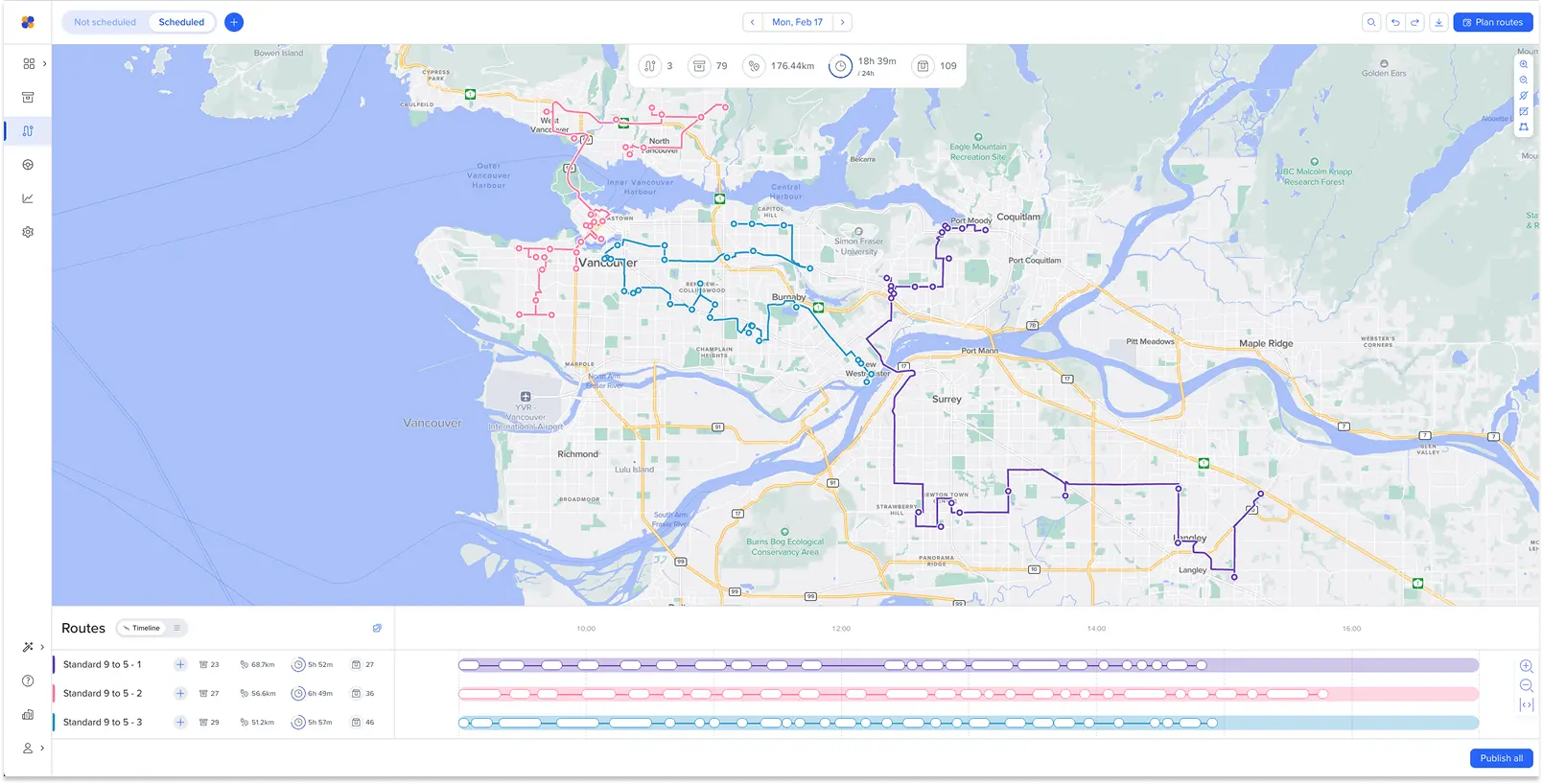
Manual route planning breaks down fast once you're handling more than a dozen stops per day. Route optimization software like Routific calculates the most efficient routes automatically, considering delivery time windows, vehicle capacity, stop duration, and traffic. Optimized routes are typically 20-30% shorter than manually planned routes — that's savings you take straight to the bottom line.
The benefits extend beyond shorter routes:
- Accurate ETAs mean customers know when to expect deliveries.
- Automated notifications reduce "where's my order?" phone calls.
- Driver apps provide turn-by-turn directions and let drivers capture photo and signature proof of delivery.
- Performance tracking shows your on-time delivery rate and helps identify problems.
For example, Greenhouse Juice uses Routific to deliver fresh-pressed organic juices across Toronto. Their logistics manager Brian Zaffuto says: “Depending on the time they order, there are some instances where customers get their orders even faster than Amazon Prime.”
2. Smart packaging and loading
Good packaging protects food in transit, maintains temperature, and reinforces your brand. Consider color-coding your food packaging for different dietary requirements, clear allergen labeling (CONTAINS NUTS), and separate compartments for different components.
One often-overlooked detail: load vehicles in delivery order. Organize packages so drivers can grab what they need without searching through the entire van. This prevents delays and delivery errors.
3. Choosing delivery partners
If you're outsourcing delivery, look for providers with temperature-controlled vehicles, real-time tracking, and experience handling food orders. These partners should share your commitment to food safety and customer satisfaction.
Frequently Asked Questions

Delivery Service Business Plan: Guide and FREE Template

How To Start A Food Delivery Service: 8 Steps To Success

