How a Wholesale Meat Distributor Overhauled Its Delivery Operations

How Two Rivers Specialty Meats cut four hours off driver departure times by fixing warehouse problems and enforcing order cutoffs.
- Route planning software can't fix broken upstream processes. Two Rivers saw the most value from their Routific adoption after they fixed warehouse operations and order cutoffs.
- Warehouse efficiency and delivery efficiency are the same problem. Two Rivers had trucks leaving at 1pm instead of 9am because their pick-and-pack process couldn't keep up with orders.
- Order cutoff times can make or break delivery day. Enforcing deadlines required customer education, but most restaurants adapted quickly once the "why" was explained clearly.
- Driver knowledge is a business risk. When all route knowledge lives in drivers' heads, one resignation can cripple an entire delivery area.
- Efficiency becomes the growth strategy when revenue is flat. After five years of stagnant revenue in a tough economy, operational optimization was the only lever Two Rivers could pull.
- Technology adoption takes patience. Drivers initially blamed routing software for problems caused by late departure times. Trust had to be built gradually as the underlying issues were resolved.
Two Rivers Specialty Meats has been supplying premium, ethically sourced meat to restaurants across British Columbia for 18 years. With six vehicles, four daily routes, and up to 100 deliveries a day spanning from downtown Vancouver to Whistler, it's a substantial wholesale operation — and until recently, it ran on intuition, paper invoices, and drivers who planned their own routes.
When Kyle McLaws stepped into the Director of Operations role after 14 years in sales, he found a delivery operation with no centralized route planning, no digital proof of delivery, and trucks that didn't leave the warehouse until early afternoon. Drivers were returning at 8 or 9pm, and overtime costs were out of control.
"We had no control, no planning over our deliveries," McLaws says. "The driver was taking a list of orders, picking which drops they wanted to do, and doing it however they wanted."
What followed was a systematic overhaul — not just of routes, but of the entire order-to-delivery pipeline. The lesson for other wholesale food distributors: route optimization and warehouse operations work hand in hand.
From chef to sales rep to operations director
McLaws' path to running delivery operations started in restaurant kitchens. "I came out of restaurants and being a chef, and stumbled into this as something different. I was trying to get out of the restaurants — that time in my life was done."
A friend already working at Two Rivers suggested he apply. McLaws spent a decade building the sales side of the business, then created and moved into a sales management role. When the previous operations director didn't work out, Two Rivers' owner asked if McLaws was interested.
"I hadn't planned that route, but it made a lot of sense," he says. "I'm not a stay-in-my-lane person. I'm going to learn everything." His culinary background gives him a perspective that pure logistics people often lack — he's been the chef waiting on a late delivery, and knows exactly how that feels.
What he found when he took over was sobering. "We had no control, no planning over our deliveries. And we do a lot of deliveries every day."
The warehouse management loop of doom
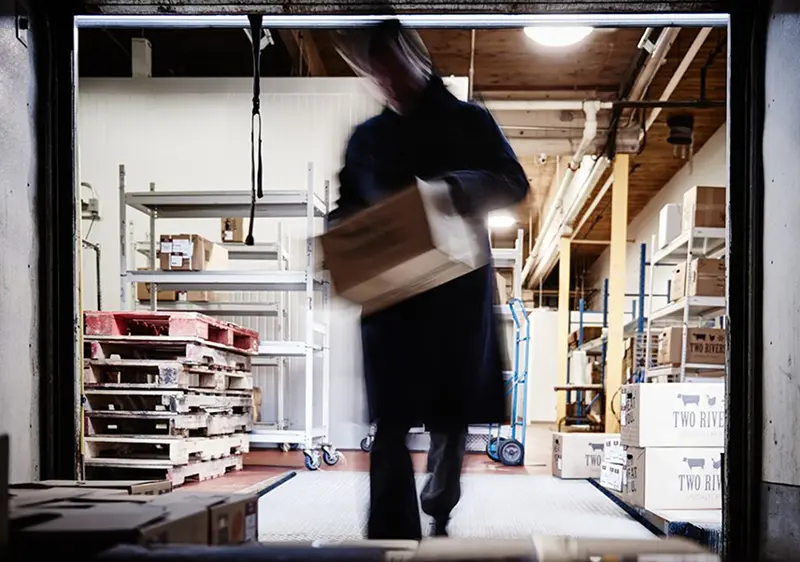
The problems started in the warehouse, not on the road.
Two Rivers receives most of its orders between noon and 6pm for next-day delivery, with about 60% of orders in by noon. Ideally, the afternoon warehouse crew would be able to complete picking and packing those orders so trucks can leave first thing in the morning.
Instead, the afternoon shift couldn't keep up with late orders, so they piled up overnight. The morning shift would arrive and immediately start finishing yesterday's packing — which meant they couldn't do the receiving, restocking, and organizing that would make picking faster. The afternoon crew then came into a disorganized warehouse, fell behind again, and the cycle repeated.
McLaws calls it "the recurring loop of doom — all you're doing is picking orders, and you don't have a chance to properly organize, which would actually make the picking and packing easier."
The result: trucks didn't leave until noon or 1pm. Drivers hit afternoon traffic, missed delivery windows, and didn't get back until 8 or 9pm. "We were seeing massive overtime, lots of labor costs."
Breaking the cycle
McLaws tackled the problem from multiple angles. He converted soft order cutoffs into hard deadlines. He restructured warehouse shifts, splitting them into a true morning and afternoon rotation instead of morning and evening. He cleared out the warehouse, moving excess inventory to off-site storage so pickers could actually find products efficiently. He hired additional staff where gaps existed.
The impact was dramatic: truck departure times moved from 12–1pm to 9–9:30am. That's four extra hours on the road before traffic builds — and four fewer hours of driver overtime every day.
"This is all nothing revolutionary," McLaws says. "It just had to be done properly. It's very simple. You put meat in boxes and get it to customers."
Why route planning software needs solid warehouse processes
Two Rivers adopted Routific to bring order to their route planning. But when they first started using it, the results weren't encouraging.
"We were trying to set it up properly, with information about customer delivery times and so on. But because we were leaving so late, it was generating the most absurd routes," McLaws explains. "We were telling it 'get to all these places by 2pm' but only leaving at noon." The resulting routes would crisscross the entire Vancouver metro area, apparently at random.
The sales team blamed the software. McLaws pushed back. "I was always telling the sales guys: it's not the program. You say 'by 2pm,' it gives you 2pm. If you leave at 1 and it has to be there by 2, it's going there first. That's just what you told it to do."
The insight is worth emphasizing for any business adopting delivery management software: route optimization can only optimize what you give it. Feed it impossible constraints — too many time windows with too little time — and it will produce routes that look irrational. The fix wasn't in the software settings. It was getting trucks out the door four hours earlier.
💡 Pro tip: If your route optimization software is generating routes that don't make sense, check your inputs. Late departure times, unrealistic delivery windows, or incomplete address data can cause "bad" routes.
Getting customers to respect order deadlines
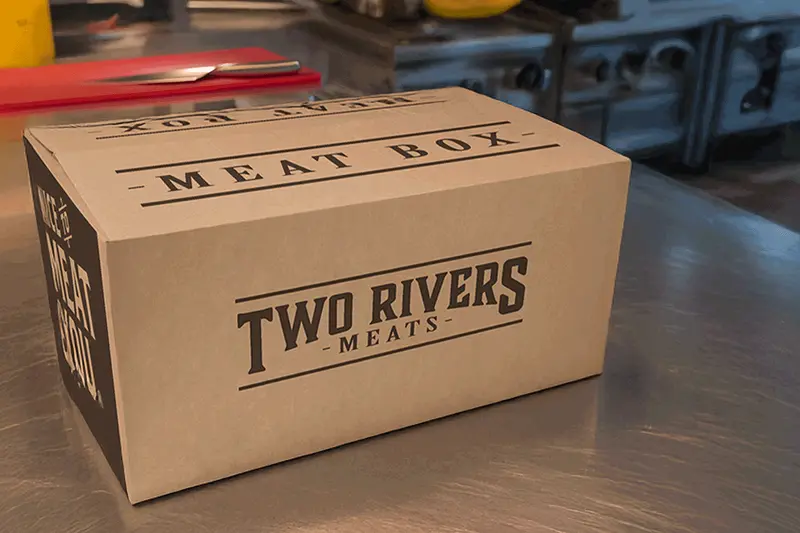
Fixing the warehouse was the supply side. The demand side required customer education.
Two Rivers' sales team had historically let restaurants order whenever they wanted — including texting orders at 11pm for next-day delivery with a 2pm cutoff. When McLaws enforced harder deadlines, some customers pushed back.
"The sales team just let customers get away with it," he says. The new approach was firm but practical: "We're always here to help. It's the food service business, things happen. We're never going to say 100% no. But if you get the majority of people in line, those outliers become really easy."
The framing that worked: "This helps me help you. Do you like receiving orders at 7pm in the middle of service? No, you don't. Help me do this, and I'll get your order to you in a timely fashion tomorrow."
McLaws also discovered a pattern familiar to many wholesale operators: "The loudest, crankiest people are probably your smallest business. They contribute the least, complain the most, and are the most difficult." Two Rivers is learning to focus on the customers that drive its business.
Route planning: from driver knowledge to system knowledge
Before Routific, route assignment at Two Rivers was simple — perhaps too simple. Delivery zones were roughly divided into east and west: "This guy takes all the drops east of this line, and this guy takes all the drops west of this line. Then you'd give them all the drops and they would do them in whatever order they wanted."
This meant all operational knowledge — customer preferences, loading dock locations, the best sequence from one stop to the next — lived in individual drivers' heads. "One of the big things we're trying to do with Routific is take that information out of individual heads," McLaws explains. He recognized the business risk "if one of the drivers quits tomorrow, and the whole route — everything about it — is in their head."
The shift to software-planned routes means any driver can cover any area, reducing the business risk of depending on specific individuals. It also means the operations team can see exactly what's on each truck — a basic capability that didn't exist before.
"We used to not even know which order was on which truck," says McLaws. "Sales reps would be calling around saying, 'Which driver has this order?' Then trying to call the driver: 'Where are you? How far away?' It was just a waste of everyone's time."
Now, when a sales rep needs a delivery status, they check Routific. "They can look at the system and see, 'They're four stops away.' Cool — I'll let Chef know it's going to be 40 minutes."
Building driver trust in the system
Driver adoption didn't happen overnight. "There was definitely resistance — strong resistance at first," McLaws says. The initial poor performance — caused by late departures, not by the software — didn't help.
"We were saying, 'We have to trust the system.' But it was performing poorly because they were leaving so late. So they didn't trust the system and blamed it, when that wasn't the root of the problem."
The key to building driver trust, he's found, is explaining the "why". "You're not getting 12 phone calls a day from sales wondering where the orders are. You're not showing up at 7 o'clock to an angry chef every day. It makes life better."
A year in, usage is solid but not complete. The team hasn't fully adopted digital proof of delivery or customer notifications yet — that's on the list for spring 2026, before summer's busy season.
"I want to get to using the system for our own good," McLaws says. He's particularly interested in the customer notifications feature. "It'd be a nice bonus for customers to know their delivery is 30 minutes away, and our sales reps wouldn't have to spend time communicating about it."
Wrong tool, right problem: why Samsara didn't work
Before Routific, Two Rivers had a subscription to Samsara, a fleet management platform designed primarily for long-haul trucking operations.
"It's just not made for what we do," McLaws explains. "You can only put maybe 20 stops in a day, and we regularly have 25 to 35 deliveries per driver."
Not all delivery software is built for the same kind of delivery. Samsara excels at tracking trucks over long distances with few stops. Wholesale food delivery — with dense, multi-stop urban routes and tight time windows — requires a fundamentally different approach to route planning.
Two Rivers found Routific through a friend at Mikuni Wild Harvest, a Vancouver specialty food distributor that uses the same software. "He spoke super highly of it and he's a really well-aligned reference, so it felt like the right decision."
Navigating economic headwinds
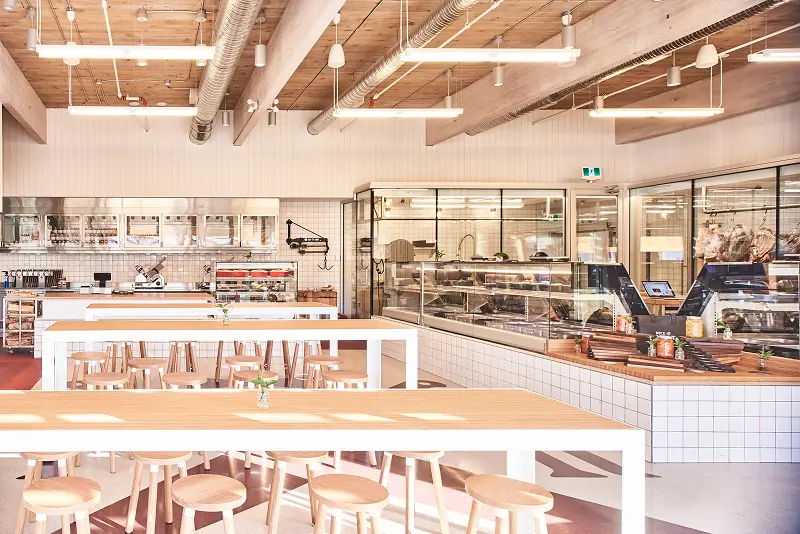
Restaurants across Canada are facing a tough economic climate, with rising food prices just one aspect of a consumer affordability crisis that has deepened since COVID. This means Two Rivers' delivery optimization isn't happening against a backdrop of rapid growth.
"We were on an upward trajectory, and then that really changed," McLaws says. The company pivoted quickly when restaurants shut down, expanding its retail business to compensate. "We were down, but not as much as we would have been."
The headwinds haven't let up. As a premium, ethically sourced meat supplier, Two Rivers competes on quality rather than price — and in a tough economy, that's a harder sell. "Restaurants are saying their costs are going up everywhere. Their ability to buy premium products is dwindling."
This economic pressure is exactly what makes operational efficiency so critical. "We try and optimize what we do here. Margins are shrinking for sales, so we've got to find a way to be more efficient."
For Two Rivers, route optimization isn't about scaling up. It's about surviving a flat market by eliminating inefficiency every delivery day.
💡 Ready to optimize your wholesale delivery routes? Routific helps food distributors plan efficient multi-stop routes in minutes — whether you're doing 50 stops or 150. Start your free trial today.
Lessons for wholesale food distributors
Two Rivers' journey offers several insights for wholesale food businesses looking to improve their delivery operations:
- Fix the warehouse before you fix the routes. Route optimization software can't compensate for trucks that leave four hours late. Start with the processes that determine when your drivers actually get on the road.
- Soft deadlines cost real money. Every late order that gets accommodated pushes back the whole operation. Enforce cutoffs, communicate the reasoning, and accept that a few customers won't like it.
- Get knowledge out of people's heads and into systems. If your delivery operation depends on specific drivers knowing specific routes, you have a fragility problem. Route planning software and delivery notes make any driver able to cover any route.
- Choose software built for your delivery type. Long-haul fleet management tools don't work for dense urban multi-stop delivery. Make sure whatever you adopt is designed for the kind of routes you actually run.
- Explain the "why" to your team. Driver resistance to new technology often stems from poor first experiences. Fix the upstream problems first, demonstrate that the system works, and frame adoption in terms of what's in it for them.
- Efficiency is a growth strategy. When revenue is flat, every dollar saved in overtime, fuel, and wasted driver hours goes straight to the margin. You don't have to be growing fast to benefit from operational optimization.
Frequently Asked Questions
What's the difference between fleet management software and delivery management software?

Fleet management software like Samsara focuses on tracking vehicles over long distances — fuel consumption, driver behavior, GPS location. It's designed for operations with few stops and long hauls. Delivery management software like Routific is built for operations with many stops in a smaller area, handling route optimization, delivery windows, proof of delivery, and customer notifications. Wholesale food distributors typically need the latter.
How long does it take to see results from route optimization software?
The software itself works immediately, but results depend on your operation being ready for it. Two Rivers found that Routific generated poor routes when trucks were leaving late and delivery windows were unrealistic. Once they fixed warehouse processes and enforced order cutoffs, the same software produced dramatically better routes. Plan for an operational tune-up alongside software adoption.
Can delivery software work for businesses with drivers who resist new technology?
Yes, but expect a transition period. Two Rivers experienced strong driver resistance initially, compounded by the fact that routes looked irrational due to late departure times. As the underlying operational problems were fixed and routes started making sense, driver buy-in improved significantly. The key is fixing the inputs so the software's output earns trust.
How to Start and Scale a Farm Cooperative: From Barn to 25-Farm Distribution Network
Best Last Mile Delivery Software for Growing Businesses (2026)