
Routes so smart, drivers actually follow them
Routific's smart route optimization engine builds routes that are fast, accurate, and visually clean — so your team spends less time second-guessing and more time delivering.
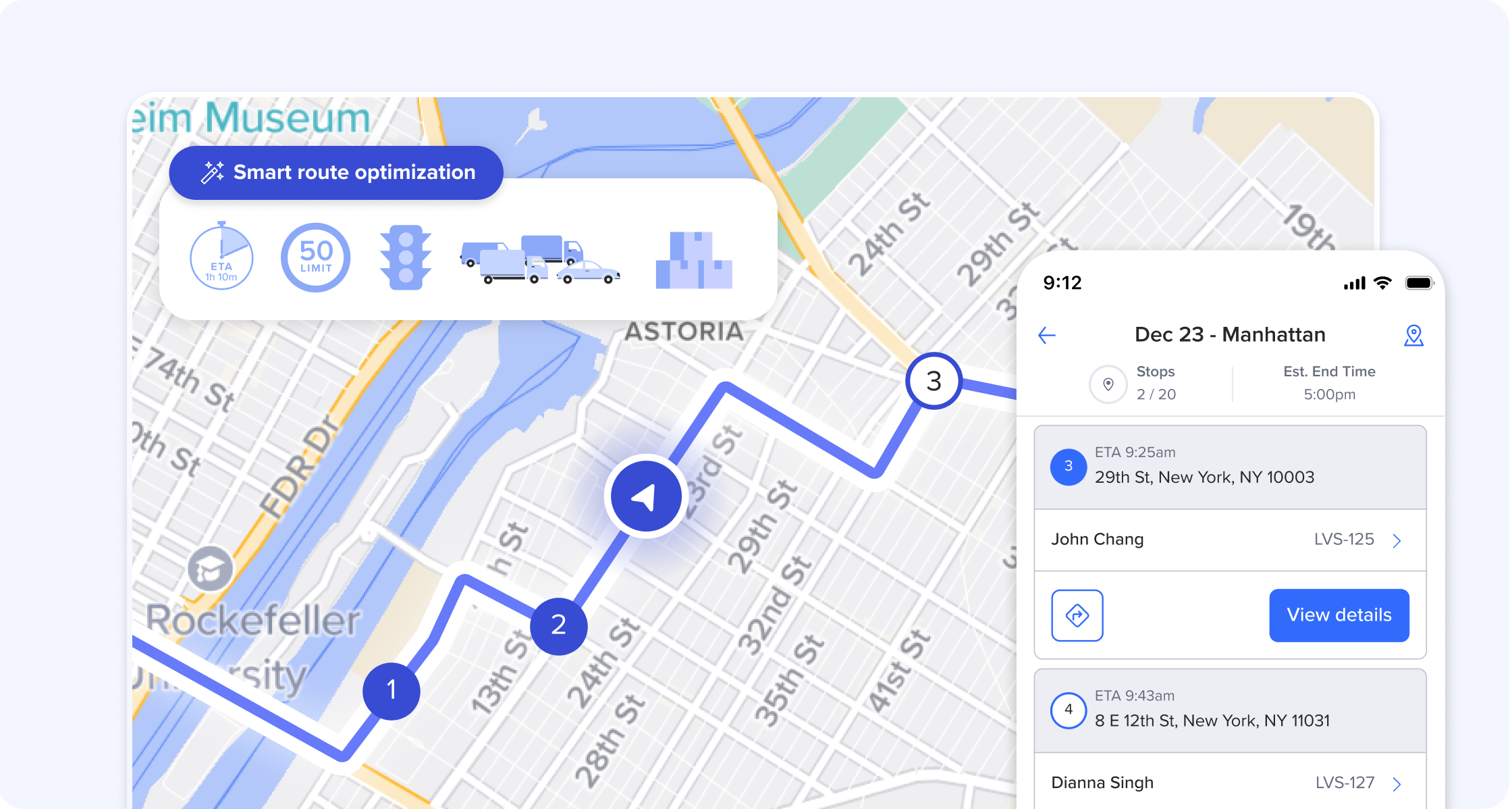
OPTIMIZED
No more spaghetti routes!
A tangled route erodes trust in the plan, and in the software. Drivers reorder stops, go off-script, or plan their own path. And once a driver stops trusting the route, the optimization is lost.
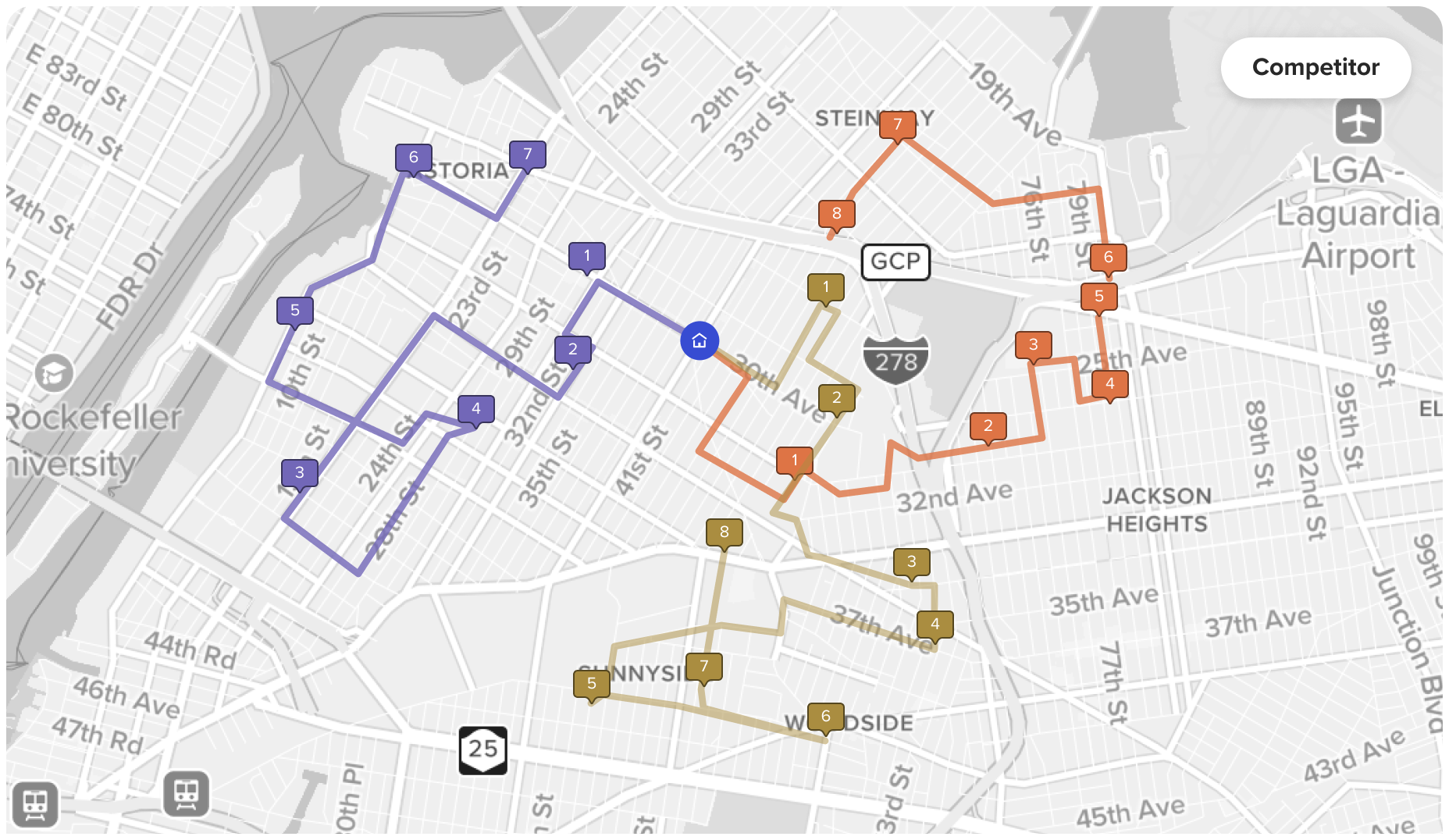

ACCURATE
ETAs built on real-world traffic data
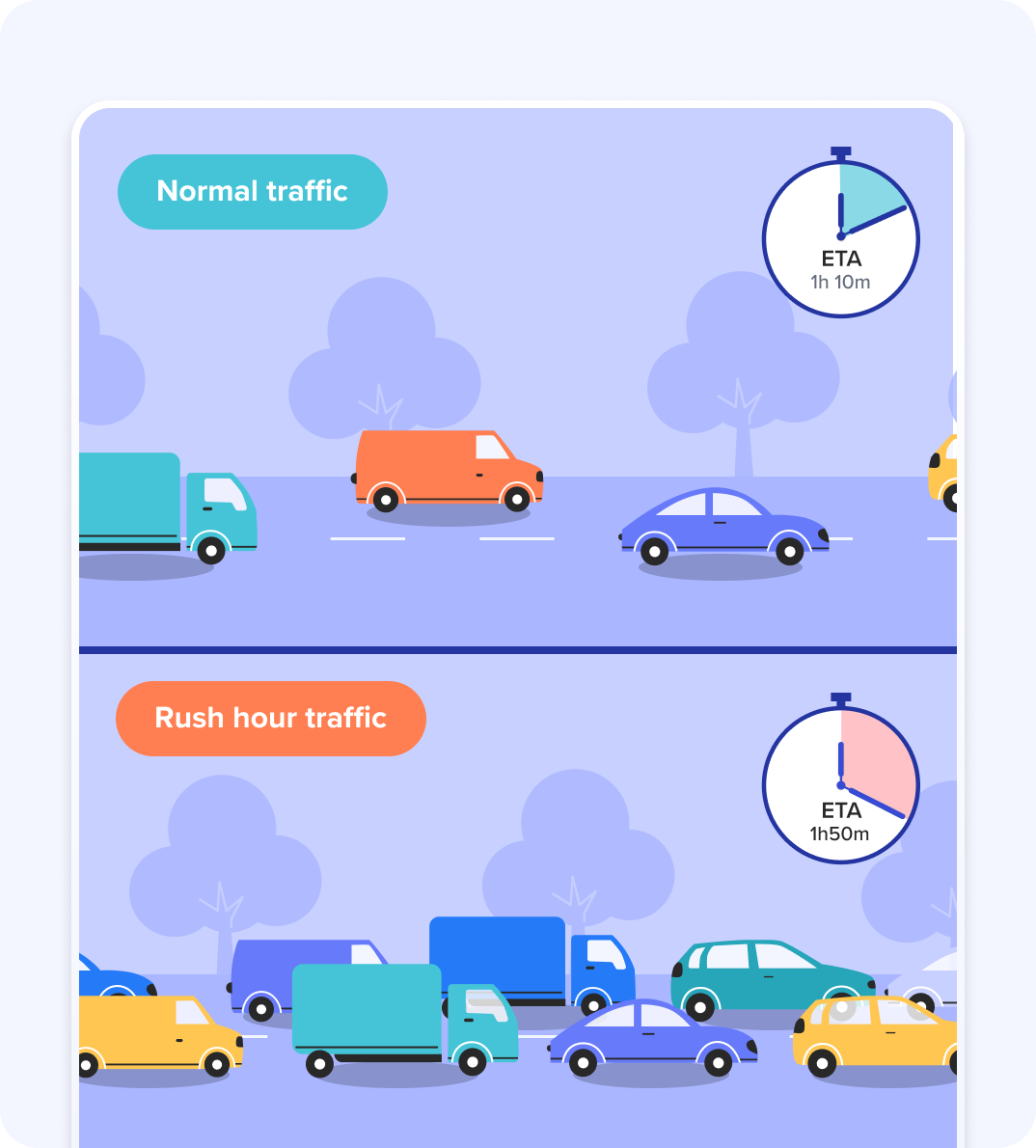
Distance alone doesn't determine how long a delivery takes. Traffic is the missing ingredient in many route planners. Routific's algorithm incorporates historical traffic data to build routes and ETAs that reflect how roads actually behave, not just how far apart stops are.
Traffic-informed routing

Most routing tools calculate distance, then apply traffic as an afterthought. Routific builds traffic directly into the optimization so the route your drivers receive already accounts for how roads behave, not just how long they are.
Accurate ETAs at dispatch
A delivery window is only useful if it's realistic. When ETAs are based on distance alone, they can be over-optimistic,and wrong when it matters most. Routific's traffic-informed ETAs give customers delivery promises they can count on, and give drivers schedules they can actually keep.
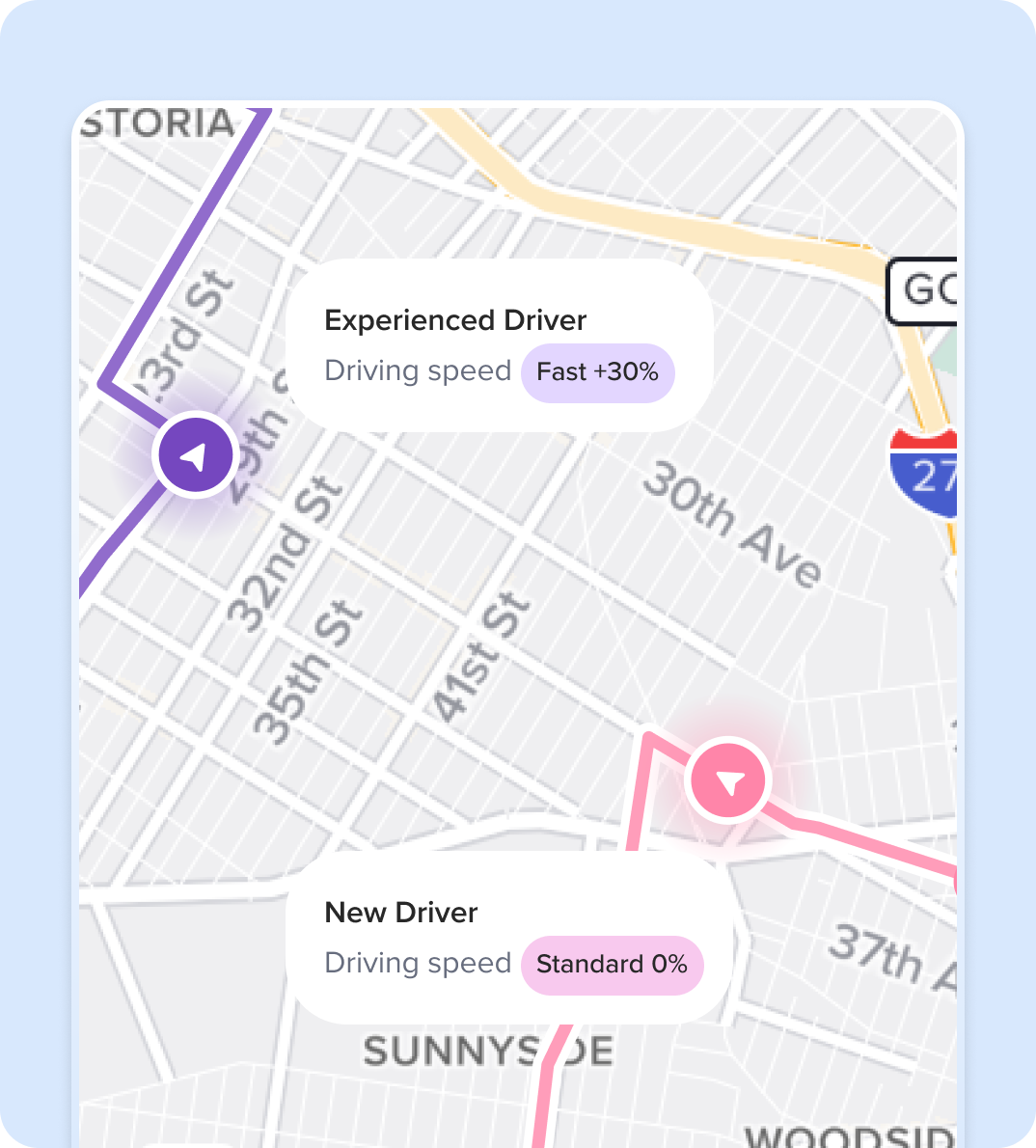
Driver speeds
Every driver moves at a different pace – on the road and while carrying out deliveries. Routific lets you adjust each driver’s speed individually, so your ETAs reflect how your team actually operates.
FAST
Built to grow with you
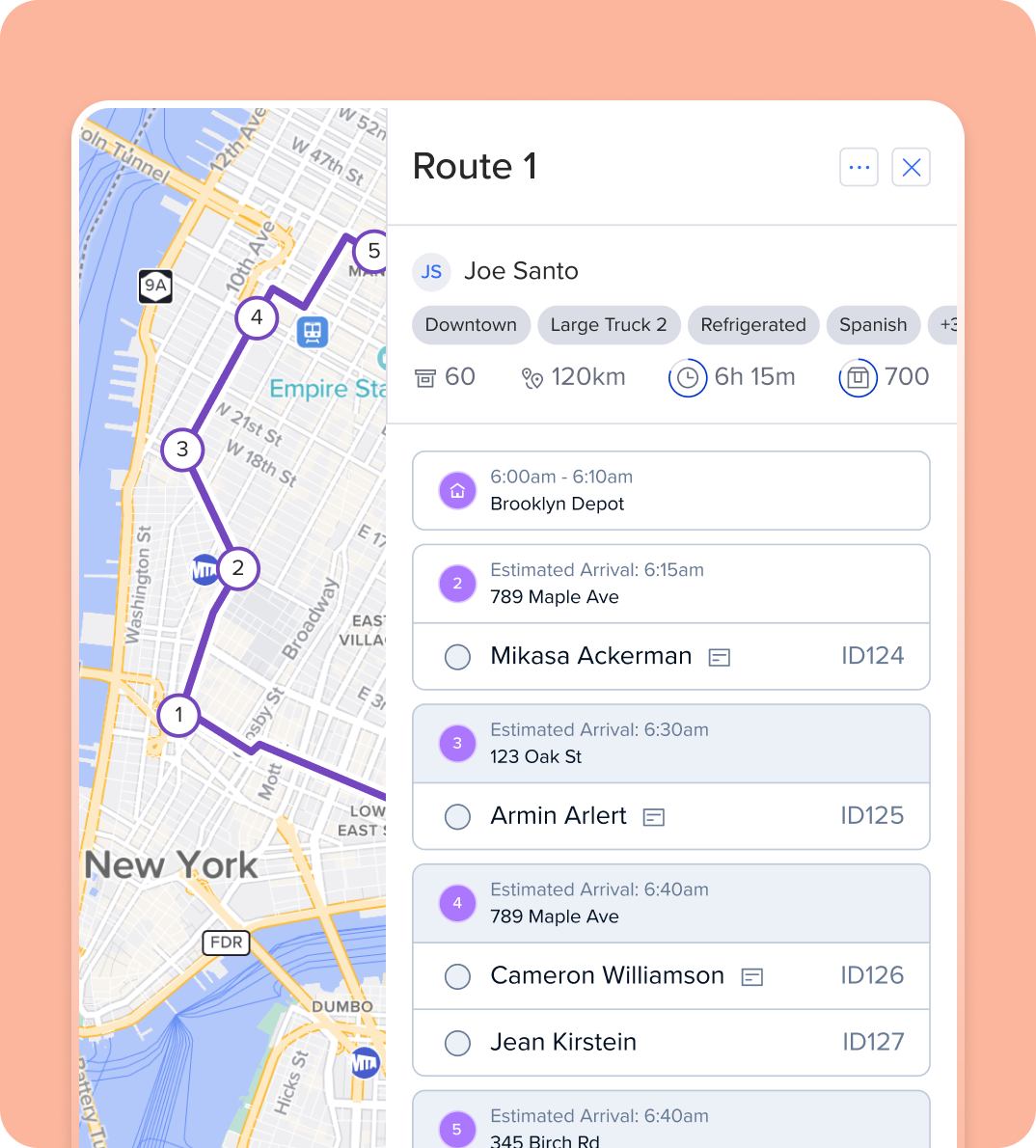
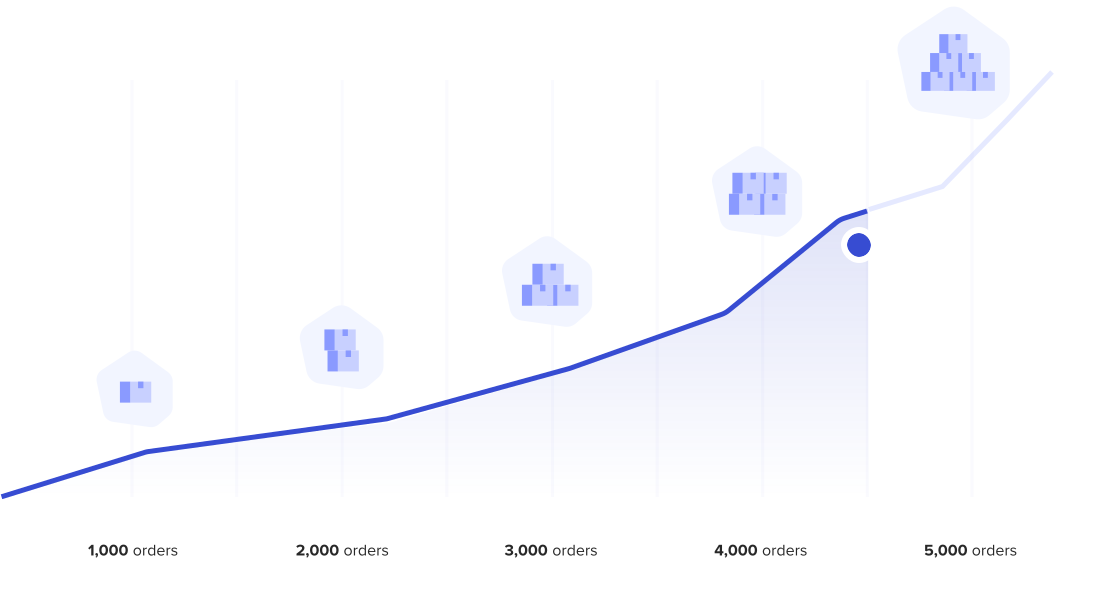
As your business grows, so do your route planning needs. More orders, more drivers, more complexity. Routific scales with you — keeping route planning fast and simple no matter how much your operation expands.
Our algorithm handles up to 5,000 orders in a single optimization. Routes load in seconds, the interface stays snappy, and your dispatcher never waits on the software to catch up.
Your job is to grow the business. Ours is to keep the deliveries efficient.
Our algorithm handles up to 5,000 orders in a single optimization. Routes load in seconds, the interface stays snappy, and your dispatcher never waits on the software to catch up.
Your job is to grow the business. Ours is to keep the deliveries efficient.
FLEXIBLE
The algorithm is smart. Your team is smarter.
Routific's optimization engine doesn't replace your dispatcher's expertise — it amplifies it. When local knowledge, specialized drivers, or specific constraints come into play, you stay in control.
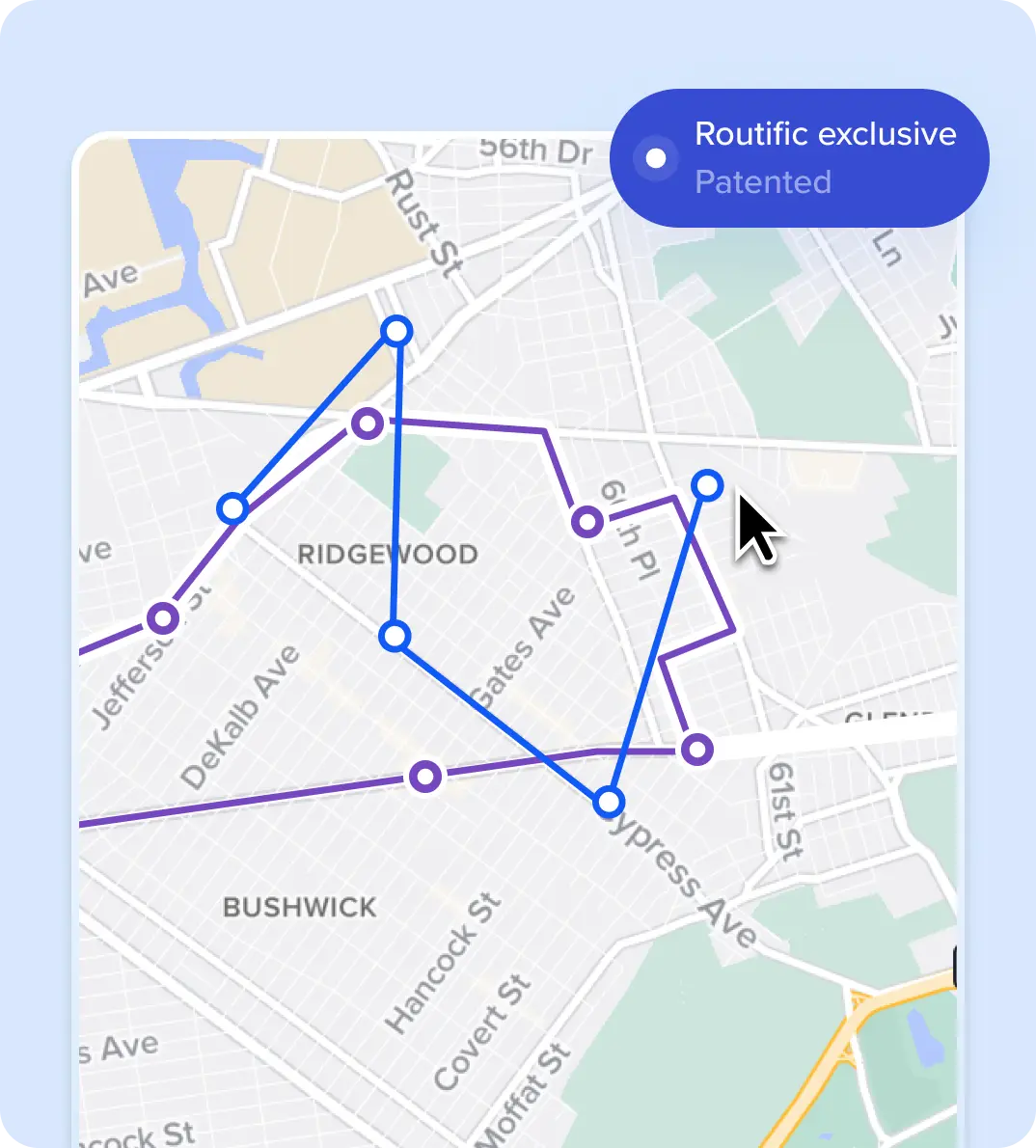
Draw your route
Guide the flow of any route directly on the map. Routific re-optimizes around your input instantly — so your local knowledge becomes part of the algorithm.
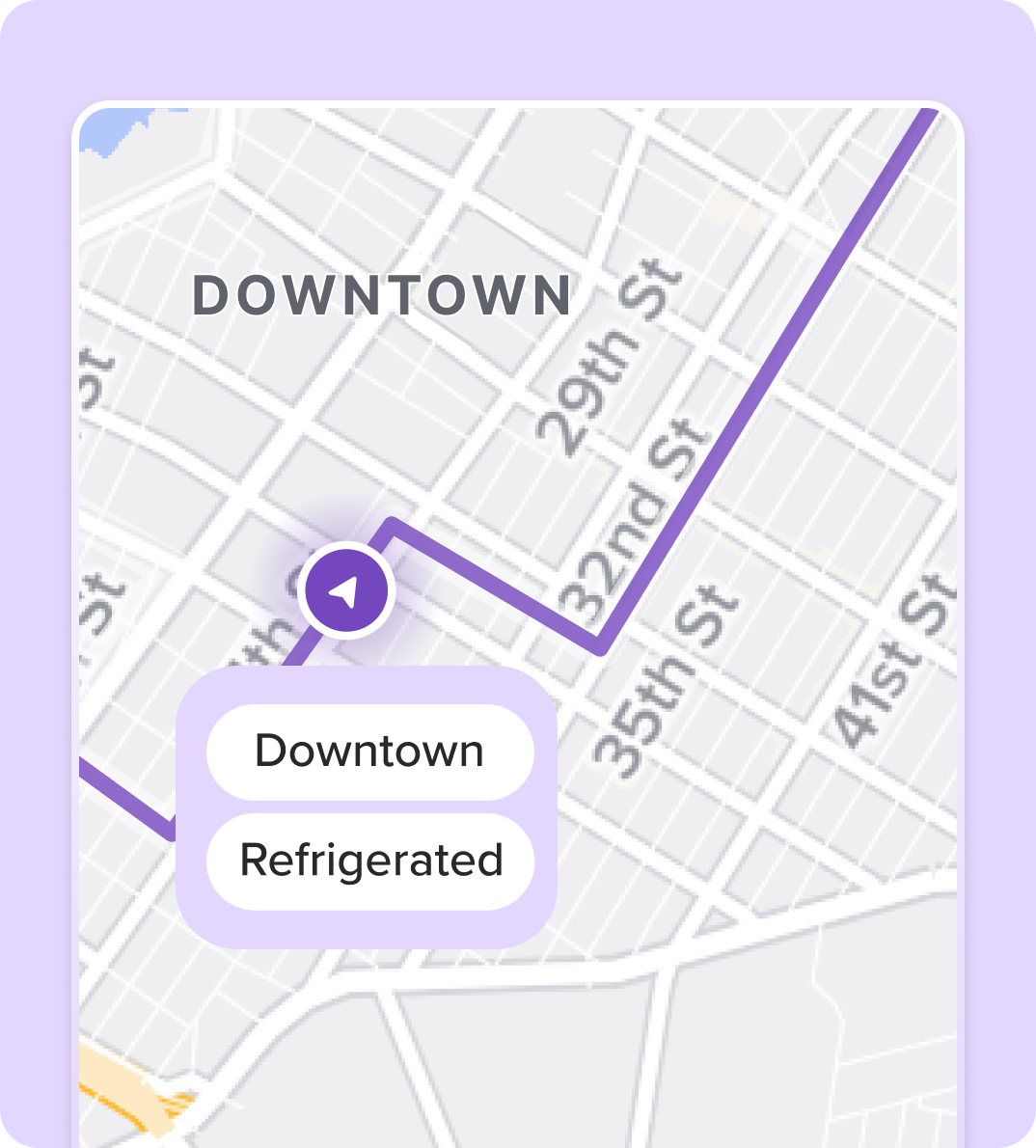
Driver tags and skills
Match orders to the right driver or vehicle every time. Assign tags for driver preference, vehicle type, certifications, or any specialized requirement, and Routific handles the rest.
Load and time-window constraints
Set capacity limits and shift times across your fleet. Routific builds routes that respect your real-world constraints.
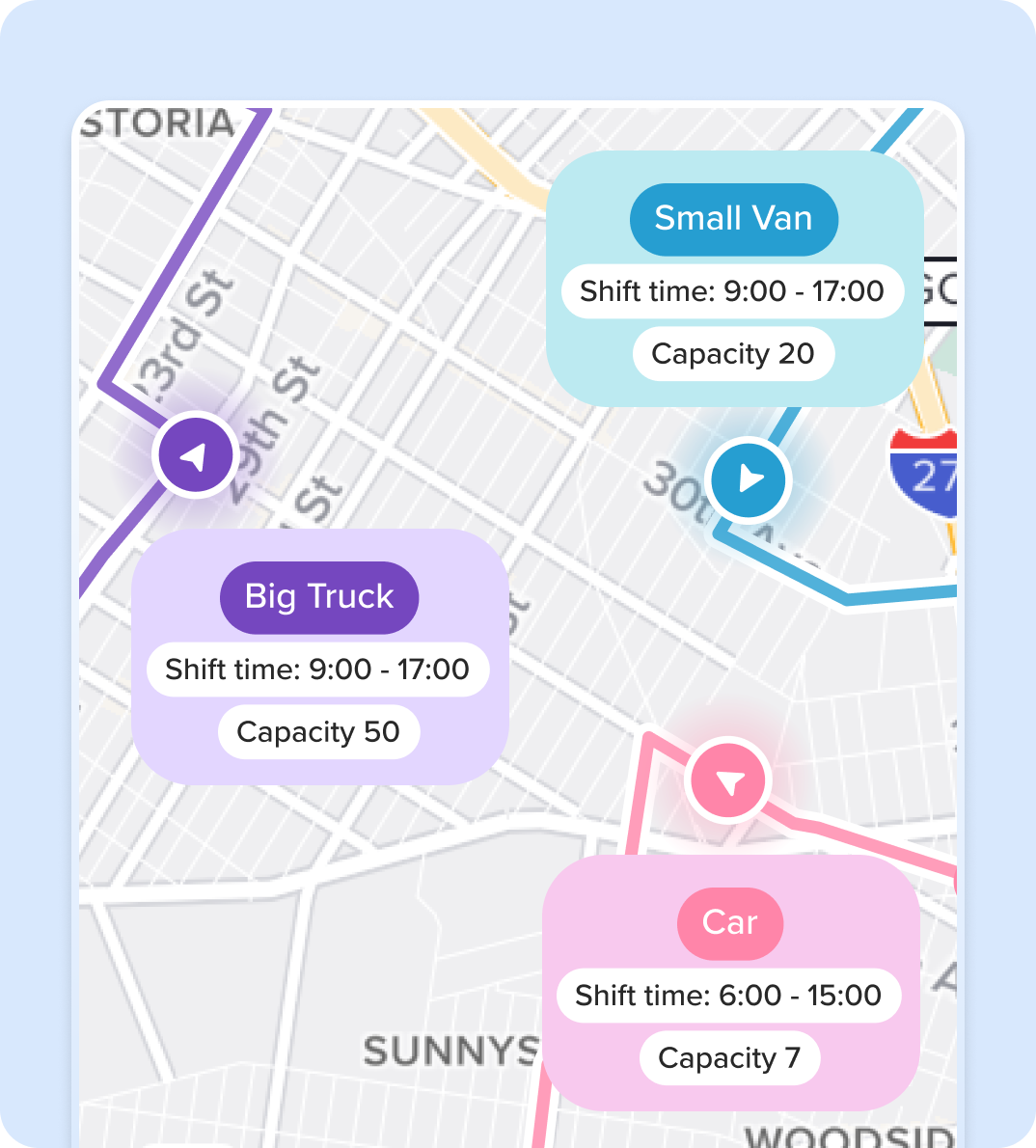
An algorithm that works within your real-world rules
Every delivery operation has constraints — time windows, vehicle capacities, shift times, local geography. Routific's algorithm respects them all. It calculates optimal departure times, sends drivers to actual delivery entrances, and automatically slots last-minute orders into the best position on an active route. When you need flexibility, soft constraints let you specify which rules can bend.


Flexible start times
Calculate the optimal departure time to arrive just-in-time for your first stop.
See how


Terrain awareness
Accounts for mountains, bridges, and rivers that add real travel time


COMING SOON
Routing that knows rush hour before your
drivers do
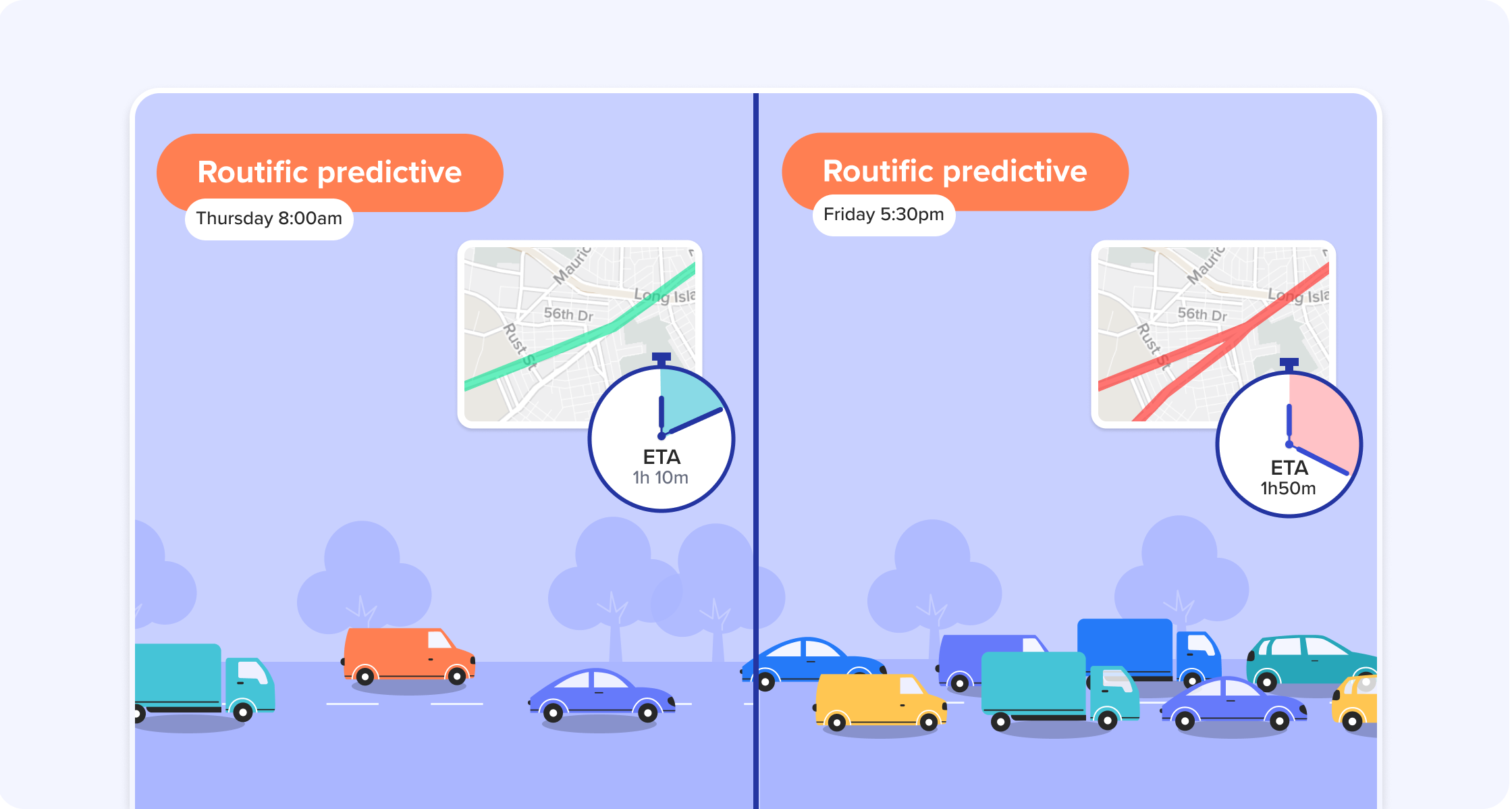
Traffic has patterns. A Thursday morning route and a Friday evening route cover the same roads, but they're not the same drive. Routific's predictive traffic feature accounts for that difference, building routes and ETAs around how roads actually behave at the time your drivers are on them.
Routing tools often underestimate travel time between stops. In New York City, that gap averages 6 minutes per stop. On a single route with 30 orders, that's 3 hours of unplanned overtime for one driver — multiplied across your entire fleet, every day.
This R&D work is funded in part by Scale AI and the Canada Innovation Corporation.
Routing tools often underestimate travel time between stops. In New York City, that gap averages 6 minutes per stop. On a single route with 30 orders, that's 3 hours of unplanned overtime for one driver — multiplied across your entire fleet, every day.
This R&D work is funded in part by Scale AI and the Canada Innovation Corporation.
Voted #1 route planning software

“The ease of use, simplicity, and customer service is second to none. I have tried and demoed every routing tool out there and none come close to Routific.”
— Morgan H, CEO (Capterra review)


