
Grocery Delivery Software for Local Stores (2026)

Grocery delivery has quirks other deliveries don't: cold chain, tight windows, fragile loads. Here are the software options built to handle them.

- Your business model determines your software choice. On-demand delivery needs different tools than scheduled delivery services.
- Scheduled deliveries are the path to profitability. Batching orders into optimized routes lets stores scale from a handful of daily deliveries to 100+ per route.
- Route optimization is the single most important feature. It directly reduces cost per delivery, which is the key metric for profitable grocery delivery.
- Grocery delivery has constraints general courier software ignores — cold chain, narrow delivery windows, and heavy, awkward loads.
- Managing deliveries in-house beats outsourcing for stores that want to control the customer experience and build direct loyalty — but platforms like Instacart can be a useful starting point.
- Essential software features: order import, route optimization, dispatch, real-time tracking, customer notifications, and proof of delivery.
- Pricing ranges from free to enterprise. Routific's first 100 orders are free; enterprise platforms like DispatchTrack require custom quotes.
Independent grocery store owners face a tough choice: compete with the delivery infrastructure of giants like Walmart, or outsource to Instacart and lose control of the customer experience. The right grocery delivery management software offers a third path — running your own deliveries profitably, at a fraction of enterprise cost.
This guide compares six platforms: Routific, Onfleet, SmartRoutes, DispatchTrack, Shipday, and Instacart. Your business model determines which one fits, so we'll start there, then cover what makes grocery delivery different, and the features that actually decide whether your routes make money.
Grocery delivery business models
Your delivery model is the single biggest factor in choosing the right software. The key question for your delivery system: how quickly do you promise to deliver after a customer places an order?
On-demand delivery models
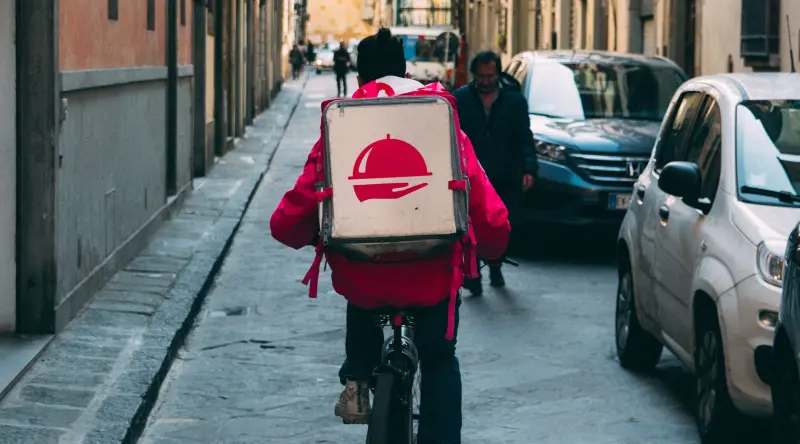
On-demand delivery seems like an offer customers can't refuse: what they want, when they want it, with no planning needed. Companies like Instacart, DoorDash, and Uber Eats are all built on fulfilling this desire. It's not something your average grocery store can offer on its own — it relies on a vast network of gig economy drivers who're available at short notice to do other people's shopping for them.
It's attractive to consumers, but it's not a sustainable business model. In fact, 15-minute grocery delivery has been called “one of the worst business models ever created”. There are several problems with it:
- Delivering on demand means lots of very small loads, and delivery drivers end up criss-crossing the same area many times a day.
- There's no opportunity to group orders and schedule them to be delivered along a single route, so you get no economies of scale.
- It's hard to predict demand, so you may not know from one day to the next how many drivers to have on shift, for example.
- Both grocers and drivers pay hefty fees to the platform, cutting into their own revenue.
Scheduled delivery models
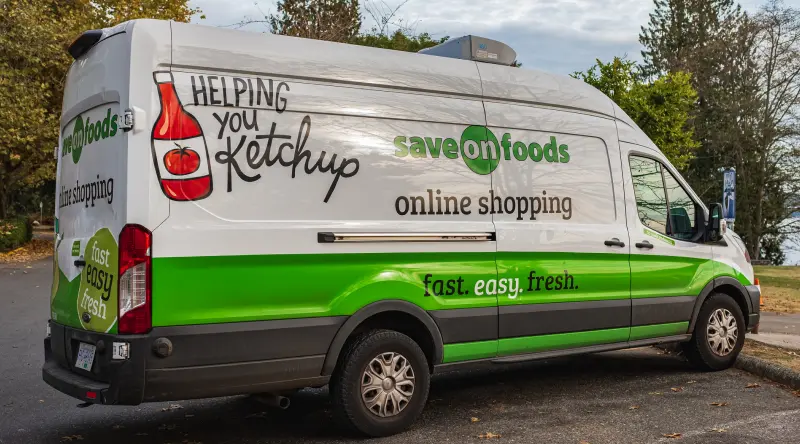
Scheduled deliveries — whether same-day or next-day — let you collect orders over a period and batch them into optimized multi-stop routes, so one driver can make dozens of deliveries in a single day. This is where route optimization software pays for itself: businesses like Walden Local have scaled from 30 deliveries per route to over 100 using this model.
Managing scheduled deliveries in-house means you control the customer experience, build direct loyalty, and keep your margins. The tradeoff is that you need to hire drivers and manage the logistics — but that's exactly what delivery management software is designed to handle.
A scheduled delivery model also allows a small operation to grow without rebuilding its entire tech stack. Chase Winters, chief performance officer at Greenhouse Juice:
“When we started our home deliveries in 2016, we had just one driver going to a dozen or so stops a day. Now we have a whole fleet of vans.”
💡Take control of your deliveries with Routific. Try us free for 7 days.
What makes grocery delivery different from other deliveries?
Groceries break most of the assumptions that general courier software is built on. If you're evaluating a platform that was designed for parcels or documents, these are the four places it will let you down.
Temperature is a deadline. Frozen and chilled items have a hard limit on how long they can sit in an unrefrigerated vehicle. A route that looks efficient on a map can still spoil a load if the cold items are dropped last. Grocery-capable software lets you tag orders as chilled or frozen and sequence them early in the run — or assign them automatically to a refrigerated truck to preserve the cold chain.
Delivery windows are narrow and non-negotiable. Customers who ordered fresh food expect it to arrive when they’re home to receive it. A parcel can sit on a porch; a bag of salmon can't. You need software that can treat time windows as a hard constraint rather than a preference.
Loads are heavy, bulky, and irregular. One order might be a single bag; the next might be six crates. Capacity has to be planned by volume and weight, not just stop count — otherwise you'll discover the problem when the van is already full.
Substitutions and missing items land on you. Fresh produce varies, stock runs out, and someone has to tell the customer. This is the single biggest argument for keeping deliveries in-house: when a third-party shopper picks a bruised avocado, it's your store the customer blames.
All of this means quality control doesn't stop when the order is packed — it runs the whole length of the route. Christine Straley, operations manager at MI Farm Co-op, describes how her team handles it on the packing side:
“We only bring out certain amounts of product at a time as we're packing and keep reloading as we're going. It's like a fine little dance to keep everything quality controlled.” — Christine Straley, MI Farm Co-op
Routific was built for exactly these constraints. Our grocery delivery software handles cold chain sequencing, hard delivery windows, and vehicle capacity in a single optimization — so the route your dispatcher sends out is one your driver can complete successfully.
Is there a way to make grocery delivery profitable?
Yes. The secret to profitable deliveries is keeping your cost per delivery as low as possible. The more deliveries each driver can make per hour or per day, the easier it is to make profitable deliveries. Efficient delivery routes are critical — which is why route optimization is the first feature to look for in any grocery delivery platform. Routific customers typically see 25% lower cost per delivery, or even more.
Two things move that number. The first is stops per route: more deliveries spread the same driver hours and the same vehicle across more orders. The second is miles, which is where fuel and wear live. Christine Straley of MI Farm Co-op describes both at once:
“It's so easy for us to be able to input the orders and then understand what is our most efficient route. We're not wasting miles on the van, we're not wasting gas, we're not wasting employee time.” — Christine Straley, MI Farm Co-op
For businesses tracking sustainability alongside cost, the two goals point the same way. Fewer miles means less fuel and lower emissions. As Chase Winters of Greenhouse Juice puts it:
“We rely on smart, AI-powered tech like Routific to ensure our delivery vans are working quickly and efficiently, keeping our fuel costs down and our carbon footprint as low as possible.” — Chase Winters, Greenhouse Juice
Upgrading from spreadsheets and pen and paper
Plenty of grocery operations still plan routes by hand. It works right up until it doesn't — usually somewhere between 15 and 30 stops a day. That’s when the dispatcher's morning disappears into a spreadsheet and drivers start improvising.
Before switching to Routific, Toronto local-food wholesaler 100km Foods planned its routes in Excel. Those routes, says Paul Sawtell, “were far from optimized.”
“With Routific, we have the confidence that routes and trucks are optimized and that our customers' delivery windows are respected.” — Paul Sawtell, 100km Foods
The cost of manual planning is easy to underestimate, because it's spread across someone's whole morning rather than showing up as a line item. Thibaut Martelain, founder and CEO of Montreal grocery rescue business Marché Second Life, put a number on it:
“We spent about an hour rewriting our routes every time we added a new pick-up point to our network. We used maps, and a lot of manual calculations. Routific’s AI solution is smart and fast. We quickly understood this was the best way.” — Thibaut Martelain, Marché Second Life
For smaller operations, the gain is as much about mental load as minutes. Christine Straley of MI Farm Co-op, which coordinates deliveries for 25 farms:
“It just is another stressor that's off of our shoulders trying to figure out 25 different stops — what's the best way to get there? It really makes it a little bit easier for us.” — Christine Straley, MI Farm Co-op
The practical test for whether you've outgrown manual planning is simple: if planning tomorrow's routes takes longer than 15 minutes, or if you can't add a late order without rebuilding the whole day, software will pay for itself quickly. If you're weighing up the switch, we've laid out what changes in moving from DIY route planning to delivery management software.
The top grocery delivery software options in 2026
1. Routific

Routific specializes in delivery management and route optimization for small to medium-sized businesses, mainly in the food and beverage sector. Orders can be uploaded from a spreadsheet, or using our API to integrate with an ordering system or Shopify. Route planning and optimization is quick and easy, with one-click dispatch to drivers and real-time tracking.
Routific users love our efficient route optimization, accurate ETAs and customer service. Our driver app is free to download for both Android and iOS.
“The ease of use, simplicity, and customer service is second to none. I have tried and demoed every routing tool out there and none come close to Routific with ease of use and simplicity.” — Morgan H, SMB CEO
Routific doesn't support high-speed, on-demand delivery, so it's not a good choice for grocery businesses that want to offer this. It's a better option for scheduled deliveries. At Greenhouse Juice, for example, customers can order up until midnight for delivery the next day.
For a grocery-specific example, read how Flourist uses route optimization to deliver baked goods and groceries across metro Vancouver.
Best for: independent grocers, produce wholesalers, and farm shares running scheduled routes.
Capterra rating: 4.9 ★ (140+ reviews)
Pricing
Routific's freemium pricing model is based on the number of orders scheduled.
- The first 100 orders every month are free, to accommodate the needs of very small businesses, non-profits, and occasional users.
- 100-1,000 orders: $150 a month.
- Above 1,000 orders we charge a few cents per stop. Pricing starts at 15c a stop up to 2,000 orders a month, going down to 3c a stop for more than 20,000 orders a month.
2. Onfleet
With a base-tier price of $619 per month, Onfleet is aimed at mid-market to enterprise-scale companies with 10 to 1,000 vehicles. It has an auto-assign feature to match drivers with jobs, which is handy for on-demand couriers and delivery services.
Online reviewers like Onfleet's in-app live chat function, which makes it easy for drivers and dispatchers to communicate. Negative reviews mention poor route optimization, the high price and the fact that it's not very user-friendly.
Best for: larger fleets that need driver-dispatcher messaging more than tight route quality.
Rating: 4.6 ★ (90+ reviews)
Pricing
Onfleet's pricing is pitched at mid-size and larger businesses:
- Starts at $619 per month with a limit of 2,500 pickup or delivery tasks.
- Barcode scanning, age verification and 5,000 pickup or delivery tasks start at $1,349 per month.
- Enterprise pricing for 10,000+ tasks per month starts at $3,099.
Onfleet does offer a 14-day free trial.
3. SmartRoutes
SmartRoutes is a newer delivery management platform. It's based in Ireland, with a growing customer base in the UK and North America.
The feature set covers all the usual bases: spreadsheet or API order import, multi-driver route optimization, a driver mobile app for iOS and Android, real-time fleet tracking, customer notifications, and barcode scanning.
They also have ready-made integrations for Shopify and WooCommerce, as well as an open API.
They have very few reviews on independent sites like Capterra, so we wouldn't put too much weight on these. But the handful of reviews that do exist highlight ease of setup and responsive customer support.
The main complaints are limited custom fields and occasional performance lag with very large datasets.
Best for: UK and Irish stores wanting per-vehicle pricing rather than per-order.
Rating: 4.8 ★ (<10 reviews)
Pricing
SmartRoutes charges per vehicle per month, with three tiers:
- Basic: $32. Includes route optimization and driver app.
- Essentials: $54. Includes proof of delivery, customer notifications, and analytics.
- Premium: $65. Includes live ETAs, a customer delivery tracking portal, and Shopify/WooCommerce integrations.
There is a 7-day free trial.
4. DispatchTrack
DispatchTrack says its delivery management software is used by global brands like Wal-Mart and Coca-Cola, as well as furniture and other retailers, technical services providers, third-party logistics (3PL) providers and more. It has a global footprint, with teams in the United States, India, Europe, Latin America, Australia, and south-east Asia.
It may not be a good option for small and medium-sized businesses, though. Its pricing is not public and you will have to contact them for a custom quotation. This is often a sign of a complex product that's tailored more to the needs of enterprise customers than SMBs.
Online reviews mention customer self-scheduling and analytics as things customers love about DispatchTrack. On the downside, some reviews say it is slow. Several reviews say they would have liked more training, suggesting the user experience may be difficult.
Best for: enterprise grocery chains with dedicated logistics teams.
Rating: 4.5 ★ (30+ reviews)
Pricing
Not disclosed. No trial version.
5. Shipday
Shipday is designed for local businesses that want to offer on-demand deliveries, including grocery stores, restaurants, and pharmacies. Stores can employ their own drivers, or connect with third-party delivery providers like Uber Eats and Grubhub.
The platform offers features like route optimization, real-time tracking, and customer notifications. It also has integrations with popular e-commerce platforms like Shopify and WooCommerce, making it easier for businesses to sync their online and offline operations.
While Shipday is a robust solution for small to medium-sized businesses, it may lack some of the advanced analytics and reporting features that larger enterprises might require.
Best for: stores that genuinely need on-demand dispatch alongside scheduled runs.
Rating: 4.7 ★ (19 reviews)
Pricing
Free plan available with limited features. Paid plans start at $29 per month.
6. Instacart
Instacart is a household name when it comes to on-demand grocery delivery. It partners with existing grocery stores to offer a wide range of products to consumers, using gig economy workers to shop for and deliver groceries.
Basically, Instacart acts as a middleman between local stores and customers. As we noted above, that creates dangers as well as opportunities. While a grocery delivery app like Instacart can enable a store to start offering online shopping and delivery really fast, the store has less control over the customer experience. This can cause issues when it comes to fresh grocery items — if the shopper doesn't select carefully and the customer is unhappy with the quality of what they get, it's probably the grocery store that will get the blame. On the other hand, when things go well it's usually Instacart that gets the credit.
Instacart only serves the US and Canada, with some limited pilot projects in Europe. If you're outside North America this is not an option for you.
Best for: testing whether local demand exists before you invest in your own fleet.
Rating: 4.3 ★ (40+ reviews) — but all these reviews are from customers, not retailers.
Pricing
Varies by partnership agreement. There are no upfront costs, but Instacart takes a percentage of each sale. No free trial.
Key features of grocery delivery software
1. Order upload
Manual entry is a hassle. Look for software that allows you to upload a spreadsheet, or use an API to automate order import from your point of sale (POS) software, online checkout, or order management system. This feature streamlines the order processing workflow, saving you time and reducing the risk of human error.
2. Route optimization
Route optimization is at the heart of efficient delivery. Software like Routific can automatically plan the most efficient routes for your drivers, reducing fuel costs and delivery times.
At New England-based Walden Local, for example, lower cost per delivery meant they could expand their reach:
“It's worth it for us to send a driver to the tip of the Cape. With density there's leeway.” — Jackie Andrews, Walden Local
3. Delivery time windows
Grocery customers book a slot and expect you to keep it. Your software needs to treat those windows as hard constraints when it builds routes, not as guidelines it can drift past. Look for the ability to set different windows per customer, block out times a customer can't receive, and see immediately when a new order won't fit into an existing route.
4. Cold chain handling
Chilled and frozen orders need to come off the van early. Software that lets you flag temperature-sensitive stops and sequence them first, or assign them to refrigerated vehicles, protects your product without forcing your dispatcher to reorder routes by hand. Combined with vehicle capacity limits, this is what separates grocery-capable software from general courier tools.
5. Dispatch and driver management
Along with route planning, dispatch and driver management features help you assign drivers to routes, track their progress, and even reassign tasks on the fly. Free driver mobile apps for both iOS and Android should come as standard.
The thing to test here is how late you can still change your mind. Grocery orders arrive right up to the cut-off, and a platform that locks routes an hour before dispatch will cost you sales. Chris Hilton, logistics manager at Empty Kitchens, Full Hearts, values exactly this:
“[Routific allows] rapid, same day route creation allowing significant adjustments to be made right up to dispatch.” — Chris Hilton, Empty Kitchens, Full Hearts
6. Real-time tracking
Keeping customers in the loop about exactly where their orders are helps to avoid frustration, and minimize “where is my order?” queries. Real-time tracking also helps dispatchers and managers monitor the fleet's performance and make real-time adjustments.
7. Customer notifications
Automated notifications are the perfect complement to real-time tracking, keeping customers informed from the moment their order is placed until it arrives at their doorstep.
It's also a way to maintain a personal connection with customers, and build customer loyalty. Farmer Brie Casadei, for example, used Routific's customer notifications feature to stay close to her customers even as her business expanded:
“There are days when one driver might be making 60 deliveries, and that's 60 customers I still want to talk to. I still want to say ‘Hey, thanks for your order.’ The communication through Routific has saved us so much time.” — Brie Casadei, Terra Firma Farm
8. Proof of delivery
Proof of delivery reassures customers and avoids disputes, especially as contactless deliveries continue to be popular. Look for driver apps that make it easy to upload pictures or capture digital signatures.
9. Analytics and reporting
Data is your friend. Comprehensive analytics and reporting features allow you to track KPIs, monitor performance, and make informed decisions. Whether it's delivery times, customer satisfaction scores, or cost per delivery, the right metrics can guide your business strategy.
Nice-to-have features
End-to-end grocery store systems that handle everything from produce sourcing to final delivery are rare for a reason. Existing software systems are often deeply embedded in the business — so while you need your POS to talk nicely to your delivery software, they don't necessarily need to come in the same package. Here are a couple of extra features that may be useful:
Inventory management
Keeping track of what's in stock is crucial for any grocery delivery service. Inventory management features allow you to monitor product levels in real time, helping you avoid overstocking or running out of essential items.
Customer data management
Customer data management tools help you store and analyze customer information, from basic contact details to order history. This data can be used for personalized marketing campaigns or to offer tailored recommendations.
Post-delivery surveys
Features like post-delivery surveys or review prompts can provide valuable insights into your service quality, helping you make data-driven improvements.
DIY deliveries or contract out? The pros and cons
Contracting your deliveries out to a third party delivery service like Instacart or Uber Eats has some advantages:
- There's no need to hire and manage drivers.
- Someone else manages all the delivery operations.
- You have access to expensive, sophisticated platforms and systems.
- It's a relatively quick and easy way to begin offering online grocery ordering.
The disadvantages include:
- You have no control over the delivery experience.
- Customer loyalty goes to the platform, not the store.
- It's more difficult to deal with customer queries.
- You risk being locked in to someone else's business.
- Fees can eat into profits.
Basically, inviting someone else to handle your deliveries involves gaining convenience and the ability to offer your customers a user-friendly online grocery shopping experience. In return, you give up some control and potentially some profits.
💡Take control of your deliveries with Routific. Try us free for 7 days — no credit card needed.
Wrapping it up
Your business model is the biggest factor in choosing the right software. For on-demand grocery delivery, Shipday and Instacart are the main options to consider. For scheduled in-house deliveries, Routific, Onfleet, SmartRoutes, and DispatchTrack each serve different scales — from small independents to global enterprise. If you're a startup or not sure where to start, Routific's free tier (first 100 orders free) is a low-risk way to test route optimization before committing to a paid plan.
Frequently Asked Questions
What is grocery delivery software?

Grocery delivery software helps stores plan, manage, and track their own deliveries. Core features typically include order import (from spreadsheets or ordering systems), route optimization to plan efficient multi-stop routes, dispatch tools to assign drivers, real-time tracking, customer notifications, and proof of delivery. Some platforms also offer analytics, customer satisfaction surveys, and direct integrations with e-commerce systems like Shopify. Grocery delivery software is distinct from consumer-facing apps like Instacart or DoorDash, which act as third-party intermediaries between stores and customers.
What's the difference between on-demand and scheduled grocery delivery?
On-demand grocery delivery fulfills orders immediately, typically within hours, using gig-economy drivers. It's convenient for customers but expensive to operate because each delivery is dispatched individually, with no opportunity to batch orders into efficient routes. Scheduled delivery lets stores collect orders over a period — usually for same-day or next-day fulfillment — and group them into optimized multi-stop routes. Scheduled delivery is significantly more cost-effective, which is why most independent grocery stores that manage their own deliveries use this model.
How much does grocery delivery software cost?
Pricing varies widely depending on the platform and scale. At the low end, Routific offers the first 100 orders per month free, with paid plans starting at $150/month. Shipday has a free tier with limited features and paid plans from $29/month. SmartRoutes charges $32–$65 per vehicle per month. At the higher end, Onfleet starts at $619/month and enterprise platforms like DispatchTrack require a custom quote. Most platforms price based on order volume or number of vehicles rather than a flat rate, so costs scale with your business.
How do you keep groceries cold during delivery?
Cold chain on a delivery route comes down to three things: insulated packaging, short exposure time, and route sequencing. Use insulated totes or liners with gel packs for chilled items and dry ice or frozen gel for frozen goods, load temperature-sensitive orders last so they come off the van first, and keep the total time between the cooler and the customer's door as short as possible. Route optimization software helps by letting you tag cold stops and sequence them early in the route, rather than leaving the order to chance or to a driver's judgment.
What delivery time windows should a grocery store offer?
Most independent grocery stores offer two-hour to four-hour windows for scheduled delivery, which is narrow enough to be useful to customers and wide enough to be achievable on a multi-stop route. Tighter one-hour windows are possible but reduce how many stops you can fit per route, which pushes up your cost per delivery. The important thing is that your routing software treats the window as a hard constraint, so you don't promise slots your drivers can't hit.
Can small grocery stores manage their own deliveries?
Yes — and it's often more profitable than outsourcing to a third-party platform. Managing deliveries in-house gives you full control over the customer experience, lets you build direct customer loyalty, and avoids the per-order fees that platforms like Instacart charge. The key is using route optimization software to keep your cost per delivery low. With efficient routing, even a store with just a few drivers can scale from a handful of daily deliveries to 100+ per route. Free tiers and low-cost plans from platforms like Routific and Shipday make it accessible for stores just getting started.
Is it better to use Instacart or manage grocery deliveries in-house?
It depends on your priorities. Instacart lets you offer online ordering and delivery quickly, with no need to hire drivers or manage logistics. But you give up control over the customer experience — including how your produce is selected and handled — and customer loyalty tends to go to Instacart rather than your store. Managing deliveries in-house takes more effort to set up, but you keep control of every touchpoint, retain customer relationships, and avoid ongoing platform fees. Many independent stores start with a third-party platform to test demand, then move to in-house delivery management as order volumes grow.
What features should I look for in grocery delivery software?
The essentials are: order upload (from spreadsheets or your ordering/POS system), route optimization to plan efficient multi-stop routes, hard delivery time windows, cold chain sequencing, dispatch tools to assign and manage drivers, a driver mobile app, real-time tracking, customer notifications, and proof of delivery with photo capture or digital signatures. Nice-to-have features include analytics and reporting, e-commerce integrations (Shopify, WooCommerce), customer satisfaction surveys, and barcode scanning. Inventory management and customer data management are useful but are typically handled by separate systems that integrate with your delivery software.
When should a grocery store stop planning routes manually?
The practical trigger is usually somewhere between 15 and 30 stops a day. Below that, a spreadsheet and local knowledge can work. Above it, manual planning starts costing more in dispatcher time and driver inefficiency than software would cost outright — and it becomes hard to absorb a late order without rebuilding the whole day. Other signs you've outgrown manual planning: drivers regularly re-sequencing their own stops, missed delivery windows, and no reliable way to tell a customer when to expect their order.

Best Route Planning Software For Delivery Businesses in 2026

Best Practices For Local Grocery Delivery In 2025

