
How a Vancouver Florist Uses Route Optimization to Keep Flowers Fresh on Every Delivery

See how a Vancouver florist uses Routific to keep delicate, perishable flowers fresh on every delivery — without a refrigerated van.
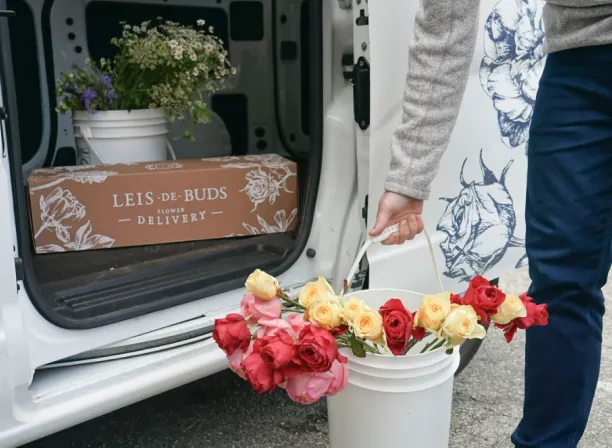
- Flowers are perishable freight. For a florist, routing affects product quality, not just fuel costs. A bloom that wilts in a hot van is a refund waiting to happen.
- You don't always need a refrigerated van. Leis de Buds keeps flowers cold by sending its driver back to the cooler two to three times a day, between delivery zones.
- The map is the command center. Seeing the whole day laid out makes it easy to re-sequence stops so fragile flowers go out first — or wait in the cooler.
- Drag-and-drop route editing handles real-world curveballs. Moving a single stop to a different driver or route covers the small, human requests that come with flowers.
- When every stem is expensive, efficiency matters more. Flower costs have climbed sharply, so getting blooms to the door fast and fresh protects both the customer and the margin.
Flowers are one of the most demanding products to deliver. They're fragile, time-sensitive, and perishable in a way most parcels aren't. Alyssa Sager, founder of the Vancouver flower shop Leis de Buds, knows the chain better than most — she researched it deeply before building her business.
“Every minute that those flowers are in regular heat, they start opening and decomposing,” she says. Some varieties are tougher than others: a peony or anemone will open quickly once picked, which changes how delivery routes have to be planned.
The cold chain is the whole game. Flowers are flown and trucked in from around the world, moved cold the entire way, and stored in a walk-in cooler until the moment they go out. Leis de Buds runs a large walk-in cooler and processes carts of flowers fresh each morning. The hard part is the last step: getting a delicate arrangement from that cooler to a customer's door without letting it warm up and bloom too soon.
The cooler-loop workflow: deliveries without a refrigerated van

Most small florists don't own a refrigerated van — and Leis de Buds doesn't either. Instead of buying expensive specialized vehicles, Sager uses routing to solve the freshness problem.
The trick is to keep delivery runs short, and return to the cooler often for fresh loads. “We'll often send our driver back two to three times a day to grab flowers,” she says. “It's actually fun to do that with Routific, because the visual on the map makes it really easy. I can see where the driver's going to be, and then I can make a few more routes, push things here and there, where I can ensure that I can bring him back to our cooler.”
One driver can cover a lot of ground this way. By looping through a zone, returning to reload, and heading out again, a single driver effectively does the work of a small fleet. “He's constantly doing loops and areas and coming back,” Sager says, “as if we had five drivers.”
When a route runs long, sequencing protects the most fragile stems. “If it's a two-hour route, we need to ensure that the peonies and anemones go first” — or they stay behind in the cooler until the next loop.
💡 Pro tip: Treat your cooler as a stop on the route, not just a starting point. If you don't have a refrigerated vehicle, plan short loops that bring your driver back to reload, and deliver your fastest-opening flowers first.
Routing around a city — and around the calendar
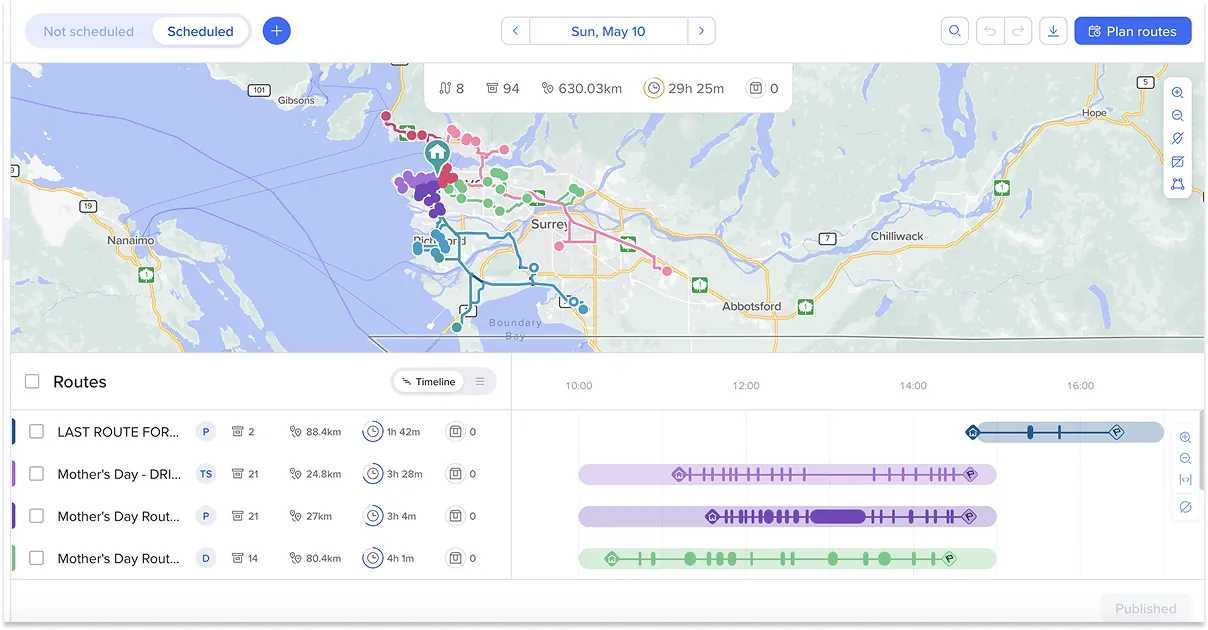
Orders cluster in different areas of a city every day, so florists can't rely on regular, recurring routes. Volume swings too, from a few deliveries on an average Tuesday to dozens on holidays like Valentine's Day and Mother's Day. Wedding season piles events on top of daily orders.
“We get creative,” Sager says. When the map is dense in one area, drivers split it; when orders are spread thin across the region, the cooler-loop approach keeps things moving. “It's much easier with Routific, frankly.”
Why the details matter: drag-and-drop and driver assignments
Flowers come with unusually personal requests. A subscription customer might love seeing a particular driver; a specific arrangement might need a specific hand. That's where quick manual control earns its keep.
“Drag and drop route editing is insanely important,” Sager says; “being able to just take something and move it to another route.” She can shift a single delivery to the right driver in seconds, without rebuilding the whole plan. For a business where the relationship is part of the product, that flexibility matters.
The day-at-a-glance view is part of why she likes Routific. “There's something meditative about being able to see the entirety of what's happening in a day,” she says, “and being able to make changes and do what's needed to make sure that my business is running properly.”
When every stem is expensive, efficiency protects your margins
Fresh flowers have become a costly inventory to manage. Sager has watched prices climb steeply over her years in the business — blooms she once bought for pennies a stem now cost dollars, and staples like peonies have multiplied in price. International sourcing and the cold chain add to the bill.
That makes efficient, freshness-first delivery more valuable, not less. When the product in the van is both expensive and perishable, a wilted arrangement or a missed window is a real loss. Routing that keeps flowers cold, sequences the fragile stems first, and gets them to the door quickly protects the customer experience and the margin at the same time. For florists watching every cost, smarter routes are one of the few levers that help on both fronts.
Sager's recommendation is direct. “I tell everyone that I know that owns a business to use Routific,” she says — anyone running deliveries or using a routing tool.
She first reviewed Routific publicly back in 2023, calling it “an absolute game-changer” for her flower delivery business. Years later, the verdict hasn't changed. Asked what she'd change about the product, her answer in that review still fits: “Nothing! Truly. They are very receptive and have made changes over the years that have addressed our feedback.”
💡 Ready to keep your deliveries fast and fresh? Routific helps florists plan optimized, freshness-first routes in minutes — and it integrates with Shopify to pull in your orders automatically. Start your free trial today.
Frequently Asked Questions
How do florists keep flowers fresh during delivery?

Florists keep flowers fresh by protecting the cold chain right up to the doorstep — storing blooms in a cooler, sequencing the fastest-opening flowers first, and minimizing the time arrangements spend in a warm vehicle. Route optimization helps by building efficient delivery orders and, for shops without refrigerated vans, by looping drivers back to the cooler to reload between zones.
Do you need a refrigerated van for flower delivery?
Not necessarily. Many small flower shops deliver without a refrigerated van by planning short delivery loops that return to the cooler, delivering delicate flowers early in the route, and keeping driving time tight. Leis de Buds, for example, sends its driver back to the cooler two to three times a day instead of running a refrigerated vehicle.
Can route optimization handle last-minute flower orders?
Yes. Last-minute orders are common in floristry, especially around holidays. With Routific, you can drop new stops into the plan and re-optimize in minutes, then drag and drop individual deliveries between drivers or routes as needs change through the day.
How does Routific help florists manage multiple drivers and wedding season?
When order volume spikes — like during wedding season — Routific lets a florist split dense delivery areas across several drivers and assign specific stops to specific people. The map view shows the whole day at once, making it easy to balance loads and reassign deliveries on the fly.
Does Routific work with Shopify for flower shops?
Yes. Routific integrates with Shopify, so a flower shop selling online can pull orders and delivery addresses straight into its routing without re-entering them. That keeps daily planning fast even when orders are coming in right up to the cutoff.

Flower Subscription Service Blooms With Intelligent Route Optimization

Best Route Planning Software For Last Mile Delivery Businesses in 2026

