'%3E%3Cpath id='Hexagon top left' d='M4.13 4.66C4.20 4.40 4.40 4.20 4.66 4.13L11.85 2.20C12.11 2.13 12.39 2.20 12.57 2.39L17.84 7.66C18.03 7.85 18.10 8.13 18.03 8.38L15.99 16L8.38 18.03C8.13 18.10 7.85 18.03 7.66 17.84L2.39 12.57C2.20 12.39 2.13 12.11 2.20 11.85L4.13 4.66Z' fill='%23FFAD0A'/%3E%3Cpath id='Hexagon bottom right' d='M16.00 16.00L23.61 13.96C23.87 13.89 24.14 13.96 24.33 14.15L29.60 19.42C29.79 19.60 29.86 19.88 29.79 20.14L27.86 27.33C27.79 27.59 27.59 27.79 27.33 27.86L20.14 29.79C19.88 29.86 19.61 29.79 19.42 29.60L14.15 24.33C13.96 24.14 13.89 23.87 13.96 23.61L16.00 16.00Z' fill='%23FFAD0A'/%3E%3Cpath id='Hexagon bottom left' d='M15.99 16.00L18.03 23.61C18.10 23.87 18.03 24.14 17.84 24.33L12.57 29.60C12.39 29.79 12.11 29.86 11.85 29.79L4.66 27.86C4.40 27.79 4.20 27.59 4.13 27.33L2.20 20.14C2.13 19.88 2.20 19.60 2.39 19.42L7.66 14.15C7.85 13.96 8.13 13.89 8.38 13.96L15.99 16.00Z' fill='%23374CD2'/%3E%3Cpath id='Hexagon top right' d='M27.33 4.13C27.59 4.20 27.79 4.40 27.86 4.66L29.79 11.85C29.86 12.11 29.79 12.39 29.60 12.57L24.33 17.84C24.14 18.03 23.87 18.10 23.61 18.03L16.00 16L13.96 8.38C13.89 8.13 13.96 7.85 14.15 7.66L19.42 2.39C19.61 2.20 19.88 2.13 20.14 2.20L27.33 4.13Z' fill='%23374CD2'/%3E%3Cpath id='Diamond top' opacity='0.75' d='M14.15 7.66L16 5.82L17.84 7.66C18.03 7.85 18.10 8.13 18.03 8.38L16 16L13.96 8.39C13.89 8.13 13.96 7.85 14.15 7.66Z' fill='%23667AFA'/%3E%3Cpath id='Diamond left' opacity='0.75' d='M7.66 17.84L5.82 16.00L7.66 14.15C7.85 13.96 8.13 13.89 8.38 13.96L16.00 16.00L8.39 18.03C8.13 18.10 7.85 18.03 7.66 17.84Z' fill='%23667AFA'/%3E%3Cpath id='Diamond bottom' opacity='0.75' d='M17.84 24.33L16.00 26.17L14.15 24.33C13.96 24.14 13.89 23.86 13.96 23.61L16.00 16L18.03 23.60C18.10 23.86 18.03 24.14 17.84 24.33Z' fill='%23667AFA'/%3E%3Cpath id='Diamond right' opacity='0.75' d='M24.35 14.15L26.18 15.99L24.35 17.84C24.16 18.03 23.88 18.10 23.62 18.03L16.01 15.99L23.62 13.96C23.88 13.89 24.16 13.96 24.35 14.15Z' fill='%23667AFA'/%3E%3C/g%3E%3Cdefs%3E%3CclipPath id='clip0_0_101'%3E%3Crect width='32' height='32' fill='white'/%3E%3C/clipPath%3E%3C/defs%3E%3C/svg%3E)
'%3E%3Cg id='routific'%3E%3Cpath d='M8.22 5.88C6.52 5.88 5.12 6.63 4.04 8.13L3.91 8.10V5.88H0V22.83H3.91V12.30C4.17 10.74 6.03 9.47 7.99 9.47H10.90V5.88H8.22Z' fill='%23374CD2'/%3E%3Cpath d='M11.49 16.21C11.49 18.27 12.21 19.96 13.64 21.33C15.08 22.67 16.88 23.35 19.00 23.35C21.12 23.35 22.91 22.67 24.32 21.33C25.75 19.96 26.47 18.27 26.47 16.21V12.47C26.47 10.41 25.75 8.72 24.32 7.38C22.91 6.01 21.12 5.33 19.00 5.33C16.88 5.33 15.08 6.01 13.64 7.38C12.21 8.72 11.49 10.41 11.49 12.47V16.21ZM22.55 16.54C22.55 18.40 21.05 19.77 19.00 19.77C16.94 19.77 15.41 18.40 15.41 16.54V12.14C15.41 10.28 16.94 8.91 19.00 8.91C21.05 8.91 22.55 10.28 22.55 12.14V16.54Z' fill='%23374CD2'/%3E%3Cpath d='M39.97 16.02C39.97 18.01 38.31 19.57 36.22 19.57C34.13 19.57 32.53 18.30 32.53 16.34V5.88H28.62V16.02C28.62 18.10 29.24 19.83 30.44 21.17C31.68 22.50 33.22 23.16 35.01 23.16C37.07 23.16 38.90 22.05 39.84 20.35L40.01 20.39L40.07 22.83H43.89V5.88H39.97V16.02Z' fill='%23374CD2'/%3E%3Cpath d='M54.92 19.24C53.38 19.24 52.63 18.66 52.63 17.52V9.47H56.81V5.88H52.63V1.97H48.75V5.88H45.71V9.47H48.72V16.87C48.72 20.68 50.97 22.83 55.01 22.83H57.14V19.24H54.92Z' fill='%23374CD2'/%3E%3Cpath d='M66.46 3.93C66.82 3.93 67.11 3.63 67.11 3.28V0.67C67.11 0.31 66.82 0.02 66.46 0.02H63.85C63.49 0.02 63.19 0.31 63.19 0.67V3.28C63.19 3.63 63.49 3.93 63.85 3.93H66.46ZM67.11 7.09C67.11 6.40 66.59 5.88 65.90 5.88H59.80V9.14H63.19V19.57H59.47V22.83H70.73V19.57H67.11V7.09Z' fill='%23374CD2'/%3E%3Cpath d='M81.74 3.60V0.02H78.96C74.95 0.02 72.70 2.10 72.66 5.88H69.34V9.47H72.66L72.70 22.83H76.58V9.47H80.76V5.88H76.58V5.33C76.58 4.19 77.33 3.60 78.86 3.60H81.74Z' fill='%23374CD2'/%3E%3Cpath d='M89.80 3.93C90.16 3.93 90.46 3.63 90.46 3.28V0.67C90.46 0.31 90.16 0.02 89.80 0.02H87.19C86.83 0.02 86.54 0.31 86.54 0.67V3.28C86.54 3.63 86.83 3.93 87.19 3.93H89.80ZM90.46 7.09C90.46 6.40 89.93 5.88 89.25 5.88H83.15V9.14H86.54V19.57H82.82V22.83H94.08V19.57H90.46V7.09Z' fill='%23374CD2'/%3E%3Cpath d='M102.70 23.35C104.04 23.35 105.31 22.99 106.52 22.28C107.76 21.56 108.67 20.65 109.23 19.57L105.77 17.94C105.34 18.98 103.97 19.77 102.67 19.77C100.48 19.77 98.88 18.40 98.88 16.54V12.14C98.88 10.32 100.42 8.98 102.51 8.98C103.71 8.98 104.99 9.66 105.51 10.67L108.90 8.98C108.35 7.94 107.43 7.09 106.23 6.40C105.02 5.72 103.81 5.39 102.54 5.39C100.35 5.39 98.56 6.08 97.12 7.41C95.68 8.75 94.97 10.41 94.97 12.47V16.21C94.97 18.27 95.72 19.96 97.19 21.33C98.65 22.67 100.51 23.35 102.70 23.35Z' fill='%23374CD2'/%3E%3C/g%3E%3C/g%3E%3Cdefs%3E%3CclipPath id='clip0_0_99'%3E%3Crect width='109.28' height='26.96' fill='white'/%3E%3C/clipPath%3E%3C/defs%3E%3C/svg%3E)


 and Claude marks from Simple Icons 16.34.0 (CC0)%2C shown to say 'works with'. --%3E%3Csvg width='24' height='24' viewBox='0 0 24 24' fill='none' xmlns='http://www.w3.org/2000/svg'%3E%3Cg transform='translate(3 3) scale(0.52)'%3E%3Cpath d='M22.28 9.82a5.98 5.98 0 0 0-.5157-4.91 6.04 6.04 0 0 0-6.50-2.9A6.06 6.06 0 0 0 4.98 4.18a5.98 5.98 0 0 0-3.99 2.9 6.04 6.04 0 0 0 .7427 7.09 5.98 5.98 0 0 0 .511 4.91 6.05 6.05 0 0 0 6.51 2.90A5.98 5.98 0 0 0 13.25 24a6.05 6.05 0 0 0 5.77-4.20 5.98 5.98 0 0 0 3.99-2.90 6.05 6.05 0 0 0-.7475-7.07zm-9.02 12.60a4.47 4.47 0 0 1-2.87-1.04l.1419-.0804 4.77-2.75a.7948.79 0 0 0 .3927-.6813v-6.73l2.02 1.16a.071.07 0 0 1 .038.05v5.58a4.50 4.50 0 0 1-4.49 4.49zm-9.66-4.12a4.47 4.47 0 0 1-.5346-3.01l.142.08 4.78 2.75a.7712.77 0 0 0 .7806 0l5.84-3.36v2.33a.0804.08 0 0 1-.0332.06L9.74 19.95a4.49 4.49 0 0 1-6.14-1.64zM2.34 7.89a4.48 4.48 0 0 1 2.36-1.97V11.6a.7664.76 0 0 0 .3879.67l5.81 3.35-2.02 1.16a.0757.07 0 0 1-.071 0l-4.83-2.78A4.50 4.50 0 0 1 2.34 7.87zm16.59 3.85L13.10 8.36 15.11 7.2a.0757.07 0 0 1 .071 0l4.83 2.79a4.49 4.49 0 0 1-.6765 8.10v-5.67a.79.79 0 0 0-.407-.667zm2.01-3.02l-.142-.0852-4.77-2.78a.7759.77 0 0 0-.7854 0L9.40 9.22V6.89a.0662.06 0 0 1 .0284-.0615l4.83-2.78a4.49 4.49 0 0 1 6.68 4.66zM8.30 12.86l-2.02-1.16a.0804.08 0 0 1-.038-.0567V6.07a4.49 4.49 0 0 1 7.37-3.45l-.142.08L8.70 5.45a.7948.79 0 0 0-.3927.68zm1.09-2.36l2.60-1.49 2.60 1.49v2.99l-2.59 1.49-2.60-1.49Z' fill='%23374CD2'/%3E%3C/g%3E%3Ccircle cx='15.6' cy='15.6' r='5.6' fill='%23fff'/%3E%3Cg transform='translate(11 11) scale(0.38)'%3E%3Cpath d='m4.71 15.95 4.71-2.64.079-.2307-.079-.1275h-.2307l-.7893-.0486-2.69-.0729-2.33-.0971-2.26-.1214-.5707-.1215-.5343-.7042.05-.3522.47-.3218.68.0608 1.51.1032 2.27.1578 1.65.0972 2.44.255h.3886l.0546-.1579-.1336-.0971-.1032-.0972L6.97 9.83l-2.55-1.68-1.33-.9714-.7225-.4918-.3643-.4614-.1578-1.00.6557-.7225.88.0607.22.0607.89.686 1.90 1.47 2.48 1.83.3643.30.1457-.1032.01-.0728-.164-.2733-1.35-2.44-1.44-2.48-.6435-1.03-.17-.6194c-.0607-.255-.1032-.4674-.1032-.7285L6.28.1335 6.69 0l.9957.13.419.36.6192 1.41 1.00 2.22 1.55 3.02.4553.89.2429.83.091.25h.1579v-.1457l.1275-1.70.2368-2.09.2307-2.69.0789-.7589.37-.9107.74-.4918.58.2793.47.686-.0668.44-.2853 1.85-.5586 2.90-.3643 1.94h.2125l.2429-.2429.98-1.30 1.65-2.06.7286-.8196.85-.9046.54-.4311h1.03l.759 1.12-.34 1.16-1.06 1.34-.8804 1.14-1.26 1.7-.7893 1.36.07.1093.18-.0183 2.85-.607 1.54-.2794 1.83-.3157.83.3886.09.3946-.3278.80-1.96.4857-2.30.4614-3.43.8136-.0425.03.0486.06 1.54.1457.66.0364h1.62l3.01.2247.78.522.47.6376-.079.48-1.21.6193-1.63-.3886-3.82-.9107-1.31-.3279h-.1822v.1093l1.09 1.06 2.00 1.80 2.50 2.33.1275.57-.3218.45-.34-.0486-2.20-1.65-.85-.7468-1.92-1.62h-.1275v.17l.4432.64 2.34 3.52.1214 1.08-.17.35-.6071.21-.6679-.1214-1.37-1.92L14.38 17.95l-1.14-1.94-.1397.07-.674 7.25-.3156.37-.7286.27-.6071-.4614-.3218-.7468.32-1.47.3886-1.92.3157-1.53.28-1.90.17-.6314-.0121-.0425-.1397.01-1.43 1.96-2.17 2.94-1.72 1.84-.4128.16-.7164-.3704.06-.6618.40-.5889 2.38-3.03 1.43-1.88.929-1.08-.0062-.1579h-.0546l-6.33 4.11-1.12.1457-.4857-.4554.06-.7467.23-.2429 1.90-1.31Z' fill='%23374CD2'/%3E%3C/g%3E%3C/svg%3E)


How Regina Food Bank Scaled Food Distribution to Meet a Crisis — and Kept Growing

Regina Food Bank doubled its capacity, opened Canada’s first free grocery store, and uses route optimization to manage 130+ daily deliveries and food pickups across Saskatchewan.

- Demand has nearly doubled since 2020–21, from ~13,000 to 23,000 people served, while donations haven’t kept pace — forcing operational innovation.
- Routific handles both pickups and deliveries: Regina Food Bank uses route optimization software for food collection routes from retailers AND hamper delivery routes to clients.
- Canada’s first choice-model food bank: The Community Food Hub lets clients shop like a free grocery store instead of receiving pre-packed hampers. 9,240 families visited in its first partial year.
- Creative problem-solving at scale: An interprovincial food trade swapped Saskatchewan pulses for BC vegetables — $6,000 in trucking costs moved $250,000 worth of food.
- School program expansion: From 8 schools to 19 schools serving 19,000 students in a single scaling push.
- Technology enables lean operations: A ~30-person staff supported by volunteers uses delivery management software to coordinate a complex daily logistics operation.
Regina Food Bank in Saskatchewan is a complex food distribution operation that includes packing and distributing hampers to individuals and families, stocking a free grocery store, supplying agency partners and other food banks, and a school feeding program.
Since the pandemic their client base has nearly doubled, from around 13,000 to 23,000 people — and donations haven’t kept pace. The result is an organization that has had to think like a logistics company to fulfill its mission as a charity.
Acting CEO Evelyn Cerda explains how Regina Food Bank has scaled its operations to meet that demand, and why the motto “hunger isn’t about scarcity, it’s about distribution” has become an operational guiding principle.
A demand crisis that forced innovation

The numbers tell the story. Regina Food Bank:
- Handles around 3.8 million pounds of food annually, valued at $12.7 million.
- Packs 420–440 hampers every day, each one with enough food to help one to two people meet their basic food needs for a fortnight.
- Makes roughly 130 deliveries a day, as well as picking up supplies from grocery retailers and wholesalers.
- Stocks a free grocery store, the Community Food Hub.
- Supplies 86 agency partners and 15 food banks across Saskatchewan and beyond.
- Feeds 19,000 students through a school program.
“The demand has not slowed down,” says Cerda. “And donations have not kept pace with that demand.”
When you can’t spend more money, you have to move food more efficiently — which means rethinking how pickup, warehousing, packing, and delivery all connect.
Daily operations: pickup and delivery at scale
Regina Food Bank’s delivery operation runs in two directions — and both depend on efficient route planning.
1. Inbound food collection routes. Trucks run daily pickup routes from grocery retailers, wholesalers, and other donors. The largest single source is Loblaw Distribution via Second Harvest, supplying between 20,000 and 50,000 pounds of food per week. Pickup routes need to be planned around donor schedules, vehicle capacity, and the cold chain for perishable items.
2. Outbound hamper delivery routes. The same vehicles and route planning system then support delivery of packed hampers to clients across the city — approximately 130 stops per day. Many recipients are elderly, have disabilities, or lack transportation, making reliable delivery essential.
Their fleet includes three five-ton trucks, three vans and a three-ton truck.
How route planning software fits in
Regina Food Bank uses Routific to plan both its pickup and delivery routes.
Before adopting route planning software, Cerda says, the logistics were difficult to manage. “It was a mess before,” she explains. “Routific has been very helpful.”
💡 Pro tip: Route optimization software is the easiest way to plan efficient routes — reducing mileage, fuel costs, and driver time. Try Routific free for 7 days.
Canada’s first choice-model food bank

The most visible innovation at Regina Food Bank is its Community Food Hub — described as Canada’s first full-scale, five-day-a-week free grocery store. Funded by a $5 million capital campaign, it opened in August 2024 under the Cree name Asahtowikamik, meaning “feeding lodge”.
The traditional food bank model gives clients a pre-packed hamper. The choice model lets them walk through a store-like environment and select the food they want — just like grocery shopping, but free.
“Clients are 20% less food insecure with the choice model,” says Cerda. In its first partial year, 9,240 families used the Hub.
Using shopping data to guide purchasing
One of the more interesting operational details: even though food at the Hub is free, the organization tracks what clients choose. That shopping data feeds back into purchasing and procurement decisions, helping the food bank stock what people actually want rather than what happens to be donated.
“Our clients are already going through things in their life, so the priority is anything that’s easy to cook and time-convenient,” says Cerda. Tomato soup and mushroom soup are very popular because they’re so versatile; the same goes for pasta and tomato sauce. Rice is another popular staple, along with milk, eggs, and baked beans — “that has been a popular one we didn’t know about.”
This is a significant departure from the traditional food bank approach, where clients get what’s available. It also creates new logistics complexity: the Hub needs to be stocked like a store, with consistent inventory and variety, while the warehouse simultaneously builds hundreds of hampers per day.
Fixing food distribution: trading Saskatchewan pulses for BC vegetables

In September 2025, Regina Food Bank undertook what might be the most creative logistics solution in Canadian food banking: an interprovincial food trade with the Vancouver Food Bank.
Saskatchewan is one of the world’s largest producers of lentils and other pulses, and has a surplus — but fresh vegetables are harder to come by, especially at food bank scale. Vancouver has the opposite problem. So the two food banks traded approximately 45,000 pounds of Saskatchewan pulses for roughly 45,000 pounds of BC vegetables.
The trucking cost was about $6,000. The food value was approximately $250,000.
“It just made sense,” says Cerda. The trade model worked so well that Regina Food Bank is planning more interprovincial exchanges.
This approach — treating food distribution as a logistics optimization problem — is the same mindset that drives the Regina Food Bank’s investment in route planning software and their data-driven approach to the Community Food Hub.
Farm2Kitchen: from 15,000 to 600,000 units

Another example of the food bank’s operational ambition is Farm2Kitchen, a dry soup mix made from Saskatchewan lentils and oats. What started at a small scale — around 15,000 units in late 2023 — has grown to 600,000 units distributed nationwide through food banks across Canada.
The product turns local agricultural surplus into shelf-stable, nutritious food that can be distributed through existing food bank networks. It’s a supply chain innovation that addresses multiple problems at once: surplus commodity crops, food bank inventory gaps, and the challenge of providing nutritious options at scale.
Expanding school food programs

Regina Food Bank’s school food program is one of its fastest-growing operations. Starting with eight schools, the program expanded dramatically in January 2026 to cover 19 schools and reach approximately 19,000 students.
The partnership makes logistical sense for both sides. Before working with the food bank, schools were purchasing food individually from wholesale clubs and superstores, buying what they needed a day or two in advance. Regina Food Bank can purchase in bulk at better prices and has the storage space to hold inventory — and can sometimes use surplus food to prepare warm lunches, stretching donated food further.
“It’s a great example of how we can work together with the community to make sure more people get the food that they need — especially children,” says Cerda.
A network beyond Regina
Regina Food Bank operates as more than a local organization. It’s also a regional distribution hub, supporting 86 agency partners and 15 food banks — 10 within Saskatchewan and 5 beyond the province.
These agency partners function like last-mile distribution points, extending the food bank’s reach into communities it doesn’t serve directly. Agencies pick up from the warehouse or receive deliveries, depending on their location and capacity.
The result is a hub-and-spoke distribution model that looks more like a wholesale food operation than a traditional charity. The food bank is the central procurement and logistics engine; agencies are the retail endpoints.
💡 Does your organization manage food pickups, deliveries, or both? Routific’s route optimization software can help you plan efficient routes in minutes — and the first 100 stops per month are free, making it accessible for nonprofits and food banks. Start your free trial today.
Frequently Asked Questions
How does a food bank use route optimization software?

Food banks like Regina Food Bank use route optimization software for two kinds of routes: inbound food collection (picking up donations from grocery stores, wholesalers, and other sources) and outbound delivery (bringing hampers and food packages to clients). Software like Routific calculates the most efficient sequence of stops, reducing driving time, fuel costs, and vehicle wear — critical savings for nonprofit organizations operating on tight budgets.
What's the difference between a traditional food bank and a choice-model food bank?
Traditional food banks distribute pre-packed hampers — clients receive a standard set of items based on household size. A choice-model food bank, like Regina Food Bank’s Community Food Hub, operates more like a free grocery store where clients select the food they want. This approach reduces food waste (clients aren’t receiving items they won’t use), improves dignity, and generates data about what people actually need.
Can nonprofits afford delivery management software?
Yes. Many delivery management platforms offer nonprofit-friendly pricing. Routific’s freemium model, for example, includes the first 100 stops per month at no cost, which can accommodate smaller nonprofit delivery operations entirely for free. Larger operations can scale up affordably — and the fuel and time savings from optimized routes typically outweigh the software cost.

Best Route Planning Software For Last Mile Delivery Businesses in 2026
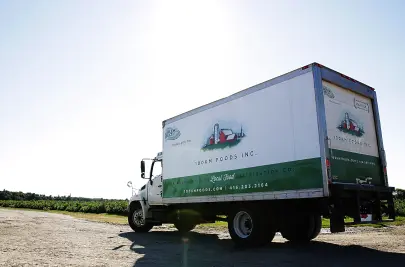
How 100km Foods Built Ontario's Leading Local Food Distribution Network
How To Improve Delivery Efficiency: A Practical Guide for Growing Businesses



Want to learn more?
Read our Ultimate Guide to Route Optimization
- What is route optimization?
- Algorithms vs humans
- Intelligent route optimization
- Choosing route optimization software
Slash delivery costs by 25% – starting today
No credit cardSet up in minutesCancel anytime