'%3E%3Cpath id='Hexagon top left' d='M4.13 4.66C4.20 4.40 4.40 4.20 4.66 4.13L11.85 2.20C12.11 2.13 12.39 2.20 12.57 2.39L17.84 7.66C18.03 7.85 18.10 8.13 18.03 8.38L15.99 16L8.38 18.03C8.13 18.10 7.85 18.03 7.66 17.84L2.39 12.57C2.20 12.39 2.13 12.11 2.20 11.85L4.13 4.66Z' fill='%23FFAD0A'/%3E%3Cpath id='Hexagon bottom right' d='M16.00 16.00L23.61 13.96C23.87 13.89 24.14 13.96 24.33 14.15L29.60 19.42C29.79 19.60 29.86 19.88 29.79 20.14L27.86 27.33C27.79 27.59 27.59 27.79 27.33 27.86L20.14 29.79C19.88 29.86 19.61 29.79 19.42 29.60L14.15 24.33C13.96 24.14 13.89 23.87 13.96 23.61L16.00 16.00Z' fill='%23FFAD0A'/%3E%3Cpath id='Hexagon bottom left' d='M15.99 16.00L18.03 23.61C18.10 23.87 18.03 24.14 17.84 24.33L12.57 29.60C12.39 29.79 12.11 29.86 11.85 29.79L4.66 27.86C4.40 27.79 4.20 27.59 4.13 27.33L2.20 20.14C2.13 19.88 2.20 19.60 2.39 19.42L7.66 14.15C7.85 13.96 8.13 13.89 8.38 13.96L15.99 16.00Z' fill='%23374CD2'/%3E%3Cpath id='Hexagon top right' d='M27.33 4.13C27.59 4.20 27.79 4.40 27.86 4.66L29.79 11.85C29.86 12.11 29.79 12.39 29.60 12.57L24.33 17.84C24.14 18.03 23.87 18.10 23.61 18.03L16.00 16L13.96 8.38C13.89 8.13 13.96 7.85 14.15 7.66L19.42 2.39C19.61 2.20 19.88 2.13 20.14 2.20L27.33 4.13Z' fill='%23374CD2'/%3E%3Cpath id='Diamond top' opacity='0.75' d='M14.15 7.66L16 5.82L17.84 7.66C18.03 7.85 18.10 8.13 18.03 8.38L16 16L13.96 8.39C13.89 8.13 13.96 7.85 14.15 7.66Z' fill='%23667AFA'/%3E%3Cpath id='Diamond left' opacity='0.75' d='M7.66 17.84L5.82 16.00L7.66 14.15C7.85 13.96 8.13 13.89 8.38 13.96L16.00 16.00L8.39 18.03C8.13 18.10 7.85 18.03 7.66 17.84Z' fill='%23667AFA'/%3E%3Cpath id='Diamond bottom' opacity='0.75' d='M17.84 24.33L16.00 26.17L14.15 24.33C13.96 24.14 13.89 23.86 13.96 23.61L16.00 16L18.03 23.60C18.10 23.86 18.03 24.14 17.84 24.33Z' fill='%23667AFA'/%3E%3Cpath id='Diamond right' opacity='0.75' d='M24.35 14.15L26.18 15.99L24.35 17.84C24.16 18.03 23.88 18.10 23.62 18.03L16.01 15.99L23.62 13.96C23.88 13.89 24.16 13.96 24.35 14.15Z' fill='%23667AFA'/%3E%3C/g%3E%3Cdefs%3E%3CclipPath id='clip0_0_101'%3E%3Crect width='32' height='32' fill='white'/%3E%3C/clipPath%3E%3C/defs%3E%3C/svg%3E)
'%3E%3Cg id='routific'%3E%3Cpath d='M8.22 5.88C6.52 5.88 5.12 6.63 4.04 8.13L3.91 8.10V5.88H0V22.83H3.91V12.30C4.17 10.74 6.03 9.47 7.99 9.47H10.90V5.88H8.22Z' fill='%23374CD2'/%3E%3Cpath d='M11.49 16.21C11.49 18.27 12.21 19.96 13.64 21.33C15.08 22.67 16.88 23.35 19.00 23.35C21.12 23.35 22.91 22.67 24.32 21.33C25.75 19.96 26.47 18.27 26.47 16.21V12.47C26.47 10.41 25.75 8.72 24.32 7.38C22.91 6.01 21.12 5.33 19.00 5.33C16.88 5.33 15.08 6.01 13.64 7.38C12.21 8.72 11.49 10.41 11.49 12.47V16.21ZM22.55 16.54C22.55 18.40 21.05 19.77 19.00 19.77C16.94 19.77 15.41 18.40 15.41 16.54V12.14C15.41 10.28 16.94 8.91 19.00 8.91C21.05 8.91 22.55 10.28 22.55 12.14V16.54Z' fill='%23374CD2'/%3E%3Cpath d='M39.97 16.02C39.97 18.01 38.31 19.57 36.22 19.57C34.13 19.57 32.53 18.30 32.53 16.34V5.88H28.62V16.02C28.62 18.10 29.24 19.83 30.44 21.17C31.68 22.50 33.22 23.16 35.01 23.16C37.07 23.16 38.90 22.05 39.84 20.35L40.01 20.39L40.07 22.83H43.89V5.88H39.97V16.02Z' fill='%23374CD2'/%3E%3Cpath d='M54.92 19.24C53.38 19.24 52.63 18.66 52.63 17.52V9.47H56.81V5.88H52.63V1.97H48.75V5.88H45.71V9.47H48.72V16.87C48.72 20.68 50.97 22.83 55.01 22.83H57.14V19.24H54.92Z' fill='%23374CD2'/%3E%3Cpath d='M66.46 3.93C66.82 3.93 67.11 3.63 67.11 3.28V0.67C67.11 0.31 66.82 0.02 66.46 0.02H63.85C63.49 0.02 63.19 0.31 63.19 0.67V3.28C63.19 3.63 63.49 3.93 63.85 3.93H66.46ZM67.11 7.09C67.11 6.40 66.59 5.88 65.90 5.88H59.80V9.14H63.19V19.57H59.47V22.83H70.73V19.57H67.11V7.09Z' fill='%23374CD2'/%3E%3Cpath d='M81.74 3.60V0.02H78.96C74.95 0.02 72.70 2.10 72.66 5.88H69.34V9.47H72.66L72.70 22.83H76.58V9.47H80.76V5.88H76.58V5.33C76.58 4.19 77.33 3.60 78.86 3.60H81.74Z' fill='%23374CD2'/%3E%3Cpath d='M89.80 3.93C90.16 3.93 90.46 3.63 90.46 3.28V0.67C90.46 0.31 90.16 0.02 89.80 0.02H87.19C86.83 0.02 86.54 0.31 86.54 0.67V3.28C86.54 3.63 86.83 3.93 87.19 3.93H89.80ZM90.46 7.09C90.46 6.40 89.93 5.88 89.25 5.88H83.15V9.14H86.54V19.57H82.82V22.83H94.08V19.57H90.46V7.09Z' fill='%23374CD2'/%3E%3Cpath d='M102.70 23.35C104.04 23.35 105.31 22.99 106.52 22.28C107.76 21.56 108.67 20.65 109.23 19.57L105.77 17.94C105.34 18.98 103.97 19.77 102.67 19.77C100.48 19.77 98.88 18.40 98.88 16.54V12.14C98.88 10.32 100.42 8.98 102.51 8.98C103.71 8.98 104.99 9.66 105.51 10.67L108.90 8.98C108.35 7.94 107.43 7.09 106.23 6.40C105.02 5.72 103.81 5.39 102.54 5.39C100.35 5.39 98.56 6.08 97.12 7.41C95.68 8.75 94.97 10.41 94.97 12.47V16.21C94.97 18.27 95.72 19.96 97.19 21.33C98.65 22.67 100.51 23.35 102.70 23.35Z' fill='%23374CD2'/%3E%3C/g%3E%3C/g%3E%3Cdefs%3E%3CclipPath id='clip0_0_99'%3E%3Crect width='109.28' height='26.96' fill='white'/%3E%3C/clipPath%3E%3C/defs%3E%3C/svg%3E)


 for 'works with Zapier'. --%3E%3Csvg width='24' height='24' viewBox='0 0 24 24' fill='none' xmlns='http://www.w3.org/2000/svg'%3E%3Cpath d='M12 3.5V9.6M12 14.4V20.5M3.5 12H9.6M14.4 12H20.5M6 6L10.3 10.3M13.7 13.7L18 18M18 6L13.7 10.3M10.3 13.7L6 18' stroke='%23374CD2' stroke-linecap='round'/%3E%3Crect x='9.6' y='9.6' width='4.8' height='4.8' rx='0.6' stroke='%23374CD2'/%3E%3C/svg%3E)
 and Claude marks from Simple Icons 16.34.0 (CC0)%2C shown to say 'works with'. --%3E%3Csvg width='24' height='24' viewBox='0 0 24 24' fill='none' xmlns='http://www.w3.org/2000/svg'%3E%3Cg transform='translate(3 3) scale(0.52)'%3E%3Cpath d='M22.28 9.82a5.98 5.98 0 0 0-.5157-4.91 6.04 6.04 0 0 0-6.50-2.9A6.06 6.06 0 0 0 4.98 4.18a5.98 5.98 0 0 0-3.99 2.9 6.04 6.04 0 0 0 .7427 7.09 5.98 5.98 0 0 0 .511 4.91 6.05 6.05 0 0 0 6.51 2.90A5.98 5.98 0 0 0 13.25 24a6.05 6.05 0 0 0 5.77-4.20 5.98 5.98 0 0 0 3.99-2.90 6.05 6.05 0 0 0-.7475-7.07zm-9.02 12.60a4.47 4.47 0 0 1-2.87-1.04l.1419-.0804 4.77-2.75a.7948.79 0 0 0 .3927-.6813v-6.73l2.02 1.16a.071.07 0 0 1 .038.05v5.58a4.50 4.50 0 0 1-4.49 4.49zm-9.66-4.12a4.47 4.47 0 0 1-.5346-3.01l.142.08 4.78 2.75a.7712.77 0 0 0 .7806 0l5.84-3.36v2.33a.0804.08 0 0 1-.0332.06L9.74 19.95a4.49 4.49 0 0 1-6.14-1.64zM2.34 7.89a4.48 4.48 0 0 1 2.36-1.97V11.6a.7664.76 0 0 0 .3879.67l5.81 3.35-2.02 1.16a.0757.07 0 0 1-.071 0l-4.83-2.78A4.50 4.50 0 0 1 2.34 7.87zm16.59 3.85L13.10 8.36 15.11 7.2a.0757.07 0 0 1 .071 0l4.83 2.79a4.49 4.49 0 0 1-.6765 8.10v-5.67a.79.79 0 0 0-.407-.667zm2.01-3.02l-.142-.0852-4.77-2.78a.7759.77 0 0 0-.7854 0L9.40 9.22V6.89a.0662.06 0 0 1 .0284-.0615l4.83-2.78a4.49 4.49 0 0 1 6.68 4.66zM8.30 12.86l-2.02-1.16a.0804.08 0 0 1-.038-.0567V6.07a4.49 4.49 0 0 1 7.37-3.45l-.142.08L8.70 5.45a.7948.79 0 0 0-.3927.68zm1.09-2.36l2.60-1.49 2.60 1.49v2.99l-2.59 1.49-2.60-1.49Z' fill='%23374CD2'/%3E%3C/g%3E%3Ccircle cx='15.6' cy='15.6' r='5.6' fill='%23fff'/%3E%3Cg transform='translate(11 11) scale(0.38)'%3E%3Cpath d='m4.71 15.95 4.71-2.64.079-.2307-.079-.1275h-.2307l-.7893-.0486-2.69-.0729-2.33-.0971-2.26-.1214-.5707-.1215-.5343-.7042.05-.3522.47-.3218.68.0608 1.51.1032 2.27.1578 1.65.0972 2.44.255h.3886l.0546-.1579-.1336-.0971-.1032-.0972L6.97 9.83l-2.55-1.68-1.33-.9714-.7225-.4918-.3643-.4614-.1578-1.00.6557-.7225.88.0607.22.0607.89.686 1.90 1.47 2.48 1.83.3643.30.1457-.1032.01-.0728-.164-.2733-1.35-2.44-1.44-2.48-.6435-1.03-.17-.6194c-.0607-.255-.1032-.4674-.1032-.7285L6.28.1335 6.69 0l.9957.13.419.36.6192 1.41 1.00 2.22 1.55 3.02.4553.89.2429.83.091.25h.1579v-.1457l.1275-1.70.2368-2.09.2307-2.69.0789-.7589.37-.9107.74-.4918.58.2793.47.686-.0668.44-.2853 1.85-.5586 2.90-.3643 1.94h.2125l.2429-.2429.98-1.30 1.65-2.06.7286-.8196.85-.9046.54-.4311h1.03l.759 1.12-.34 1.16-1.06 1.34-.8804 1.14-1.26 1.7-.7893 1.36.07.1093.18-.0183 2.85-.607 1.54-.2794 1.83-.3157.83.3886.09.3946-.3278.80-1.96.4857-2.30.4614-3.43.8136-.0425.03.0486.06 1.54.1457.66.0364h1.62l3.01.2247.78.522.47.6376-.079.48-1.21.6193-1.63-.3886-3.82-.9107-1.31-.3279h-.1822v.1093l1.09 1.06 2.00 1.80 2.50 2.33.1275.57-.3218.45-.34-.0486-2.20-1.65-.85-.7468-1.92-1.62h-.1275v.17l.4432.64 2.34 3.52.1214 1.08-.17.35-.6071.21-.6679-.1214-1.37-1.92L14.38 17.95l-1.14-1.94-.1397.07-.674 7.25-.3156.37-.7286.27-.6071-.4614-.3218-.7468.32-1.47.3886-1.92.3157-1.53.28-1.90.17-.6314-.0121-.0425-.1397.01-1.43 1.96-2.17 2.94-1.72 1.84-.4128.16-.7164-.3704.06-.6618.40-.5889 2.38-3.03 1.43-1.88.929-1.08-.0062-.1579h-.0546l-6.33 4.11-1.12.1457-.4857-.4554.06-.7467.23-.2429 1.90-1.31Z' fill='%23374CD2'/%3E%3C/g%3E%3C/svg%3E)


How The Red Apron Delivers 1,200 Meals a Week in Ottawa

Ottawa's women-led Red Apron delivers about 1,200 prepared meals a week using electric vehicles. Co-owner Josephine Diaz explains how the delivery day works.
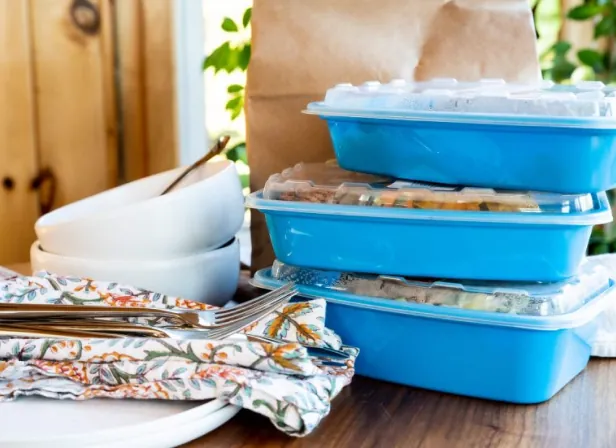
- The Red Apron has cooked for Ottawa families for 20 years, guided by one mission: "bringing families back to the table."
- The kitchen delivers about 1,200 meals a week, reaching more than 170 homes on an average delivery day.
- Three to four drivers each run two routes a day, morning and afternoon, so food never sits out too long.
- Morning delivery notifications tell customers when to put their coolers out to ensure the cold chain stays intact.
- Routes are planned the night before and updated each morning with orders that came in overnight through Shopify.
- Drivers can re-order their own stops in the Routific app, instead of calling the office.
The Red Apron is a woman-owned business that's served Ottawa for 20 years with a clear mission: to bring families back to the table to share good food cooked with local, seasonal ingredients.
Josephine Diaz has worked at The Red Apron for 14 of those years. She started in the kitchen, doing prep and packaging, and spent several years as head baker. In 2020 she moved into the office and became one of the business's six co-owners.
Building a values-led business
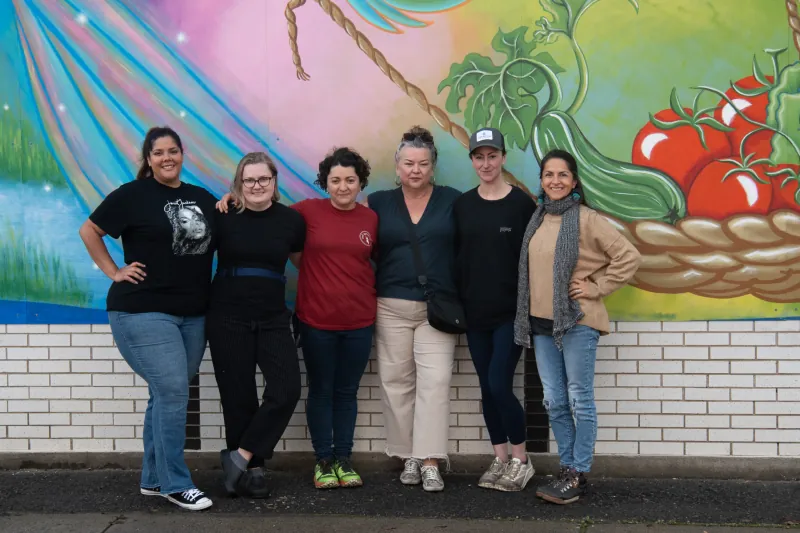
The business is women-owned and women-led, by design. "This industry is very male-dominated," Diaz says. "Even now, we find a lot of female chefs and restaurant owners don't really get the recognition that they deserve."
The two founders were mothers when they started, and the hours reflect it. No one starts before 7:30 am, and no one works later than 7 pm, which Diaz calls "very rare for this industry."
This commitment to family is reflected in Red Apron's approach to its customers, many of whom are working parents or seniors with accessibility issues who can't easily get to the store or out of their apartment.
"We just want to feed them nutritious, wholesome food and support our local economy by sourcing from as many local producers, growers, and farmers as possible, as well as trying to minimize our environmental footprint," Diaz says.
Every order supports over 30 local jobs and dozens of farmers and producers.
The same values show up in the operation:
- Electric vehicles: The Red Apron replaced its first gas vehicle with two EVs in 2018. All five delivery vehicles are now fully electric, and it hasn't needed a gas pump in over eight years.
- Reusable packaging: 99.9% of containers are reusable Friendlier containers, from another women-led Canadian company. Drivers pick up washed containers from customers' coolers and porches, and customers get a refund of their deposit. They can choose to donate their refunds to local charities, which has raised over $150,000 to date.
- A permeable parking lot: plastic grids covered in landscaping rocks still draw attention five years after the move to their current location.
How the delivery day works
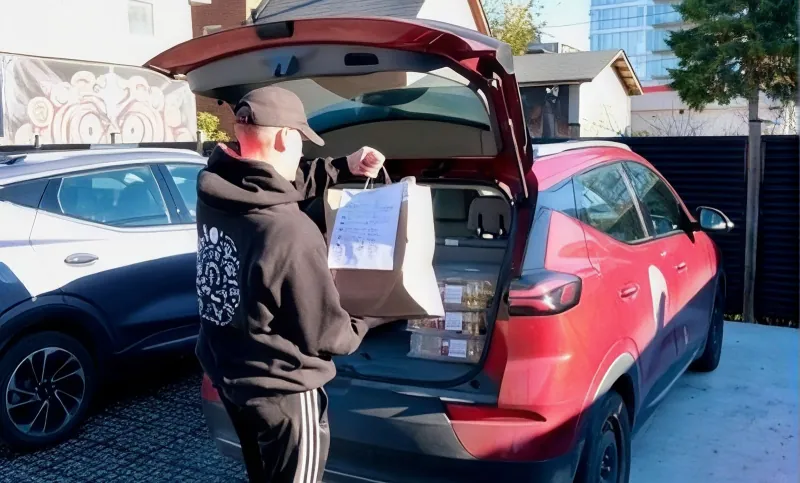
The Red Apron's kitchen never really stops. "Someone's either cooking or packaging," Diaz says.
Deliveries follow a regular sequence:
- Order: customers order from the weekly dinner menu through The Red Apron's Shopify store.
- Pack: tomorrow's meals are packaged today, with the exception of a few overnight orders which are packaged in the morning.
- Load: the morning team sorts every order into bags labeled with the address, then onto a cart for each driver to load their vehicle. "In two hours they're packaging up almost 400 portions," Diaz says. Routific’s route plan helps drivers load efficiently, with the first deliveries packed last so they’re easily accessible.
- Deliver: drivers head out the door by 10 am. Each driver runs a morning and an afternoon route, together reaching more than 170 homes on an average day.
- Run errands: it’s easy to add extra stops into the route plan if drivers need to pick up supplies on the way back, like bread from a bakery or a bag of flour.
Preserving the cold chain
Routific helps The Red Apron maintain their cold chain with insulated coolers and tight timing. "Routific helps us make sure that we keep our routes within a certain time frame," Diaz says.
She schedules two delivery runs each day, keeping each route short and giving drivers a break.
Traffic shapes the order of stops. "We know which neighborhoods we need to avoid in the afternoon," Diaz says. "So we hit the east and the west end first thing, then make our way back into the center."
Her favorite Routific feature is the lasso tool: “It really helps because once everything’s plotted on the map, it’s easy to use the lasso to assign a cluster of stops to a new route.”
A cooler on the porch
Many customers aren't home when their delivery arrives. Each morning, Routific's delivery notifications tell them when to expect it, so they can put their coolers out. "This way they're not just waiting for six hours; they know exactly what time their food's coming to them."
From manual planning to Routific

The Red Apron always delivered. But before the pandemic, "200 portions was a big number for us," Diaz says. When everyone switched to delivery, the business was already set up for it, and volume took off.
Diaz quickly realized the business needed a way to make delivery planning more efficient. “We were pulling out a map to decide which drivers should go to each area, and then drivers had to work out their own routes.” That manual planning became more and more difficult as routes got longer, says Diaz. “With the numbers we were doing, we just needed something more manageable."
The Red Apron started using Routific in 2020, enabling them to scale up to their new higher volumes with ease.
"Our Shopify orders go straight into Routific, so there's no copying addresses or juggling spreadsheets. Routific plans our routes in minutes, our drivers know exactly where they're going, and our customers know when dinner's arriving." — Josephine Diaz, Co-owner, The Red Apron
Planning the night before, topping up in the morning
Routes are optimized the night before delivery, then re-optimized first thing in the morning if last-minute orders have come in overnight.
The Red Apron uses Routific's Shopify integration to pull those last-minute orders into the morning routes, and call in an extra driver if needed.
Routes are flexible when reality breaks the plan
Real delivery days don't always go according to plan: sometimes a customer forgets to leave their cooler out, or a delivery to an apartment building is missing a buzzer number. When this happens, Routific gives dispatchers like Josephine the option to allow drivers to re-order their stops. If this option is turned on, drivers can use the mobile app to mark a stop as one to re-attempt later, or select the next stop and choose “go here first”.
"Before, they would have to call and I would have to go in and move things around for them," Diaz says. "But now they're able to reschedule their drops in a way that will make more sense for them."
💡 Selling meals on Shopify? Routific's Shopify integration brings your orders straight into route planning, and can mark them delivered or fulfilled when drivers finish. Start your free trial today.
Growing by word of mouth
The Red Apron has never needed much advertising. "We're not on the radio, we're not on the side of a bus, we're not in your mailbox," Diaz says. "People hear about us from their family and friends."
Frequently Asked Questions
How do meal delivery businesses keep food cold?

Many use insulated coolers and keep routes short. The Red Apron runs two routes per driver each day, so food spends less time on the road, and customers leave a cooler out to receive their meal. Food safety rules vary by location, so check with your local health department.
How do you deliver meals when customers aren't home?
Tell them when their delivery is coming so they can prepare. Routific's customer notifications send an ETA by text or email, so customers can put a cooler out before the driver arrives.
How do you plan delivery routes around traffic?
Start with the stops in the areas that get congested later in the day. The Red Apron's drivers head to Ottawa's east and west ends first, then work back toward the kitchen in the center. Route optimization software can weigh traffic patterns automatically.
When does a meal prep business need route planning software?
When drivers are working out their own routes from a map and volume keeps growing. The Red Apron switched to Routific in 2020, when pandemic demand took it well past its previous volume. Routific's free plan covers up to 100 orders a month.
Can I plan delivery routes from Shopify orders?
Yes. Routific’s Shopify integration imports orders automatically and sends delivery status back to Shopify, so you don’t have to re-key addresses or update orders by hand.
Three Aunties: Building a Dinner Delivery Service for New Parents

How To Launch A Profitable Meal Prep Delivery Business

How To Start A Food Delivery Service: 8 Steps To Success



Want to learn more?
Read our Ultimate Guide to Route Optimization
- What is route optimization?
- Algorithms vs humans
- Intelligent route optimization
- Choosing route optimization software
Slash delivery costs by 25% – starting today
No credit cardSet up in minutesCancel anytime