'%3E%3Cpath id='Hexagon top left' d='M4.13 4.66C4.20 4.40 4.40 4.20 4.66 4.13L11.85 2.20C12.11 2.13 12.39 2.20 12.57 2.39L17.84 7.66C18.03 7.85 18.10 8.13 18.03 8.38L15.99 16L8.38 18.03C8.13 18.10 7.85 18.03 7.66 17.84L2.39 12.57C2.20 12.39 2.13 12.11 2.20 11.85L4.13 4.66Z' fill='%23FFAD0A'/%3E%3Cpath id='Hexagon bottom right' d='M16.00 16.00L23.61 13.96C23.87 13.89 24.14 13.96 24.33 14.15L29.60 19.42C29.79 19.60 29.86 19.88 29.79 20.14L27.86 27.33C27.79 27.59 27.59 27.79 27.33 27.86L20.14 29.79C19.88 29.86 19.61 29.79 19.42 29.60L14.15 24.33C13.96 24.14 13.89 23.87 13.96 23.61L16.00 16.00Z' fill='%23FFAD0A'/%3E%3Cpath id='Hexagon bottom left' d='M15.99 16.00L18.03 23.61C18.10 23.87 18.03 24.14 17.84 24.33L12.57 29.60C12.39 29.79 12.11 29.86 11.85 29.79L4.66 27.86C4.40 27.79 4.20 27.59 4.13 27.33L2.20 20.14C2.13 19.88 2.20 19.60 2.39 19.42L7.66 14.15C7.85 13.96 8.13 13.89 8.38 13.96L15.99 16.00Z' fill='%23374CD2'/%3E%3Cpath id='Hexagon top right' d='M27.33 4.13C27.59 4.20 27.79 4.40 27.86 4.66L29.79 11.85C29.86 12.11 29.79 12.39 29.60 12.57L24.33 17.84C24.14 18.03 23.87 18.10 23.61 18.03L16.00 16L13.96 8.38C13.89 8.13 13.96 7.85 14.15 7.66L19.42 2.39C19.61 2.20 19.88 2.13 20.14 2.20L27.33 4.13Z' fill='%23374CD2'/%3E%3Cpath id='Diamond top' opacity='0.75' d='M14.15 7.66L16 5.82L17.84 7.66C18.03 7.85 18.10 8.13 18.03 8.38L16 16L13.96 8.39C13.89 8.13 13.96 7.85 14.15 7.66Z' fill='%23667AFA'/%3E%3Cpath id='Diamond left' opacity='0.75' d='M7.66 17.84L5.82 16.00L7.66 14.15C7.85 13.96 8.13 13.89 8.38 13.96L16.00 16.00L8.39 18.03C8.13 18.10 7.85 18.03 7.66 17.84Z' fill='%23667AFA'/%3E%3Cpath id='Diamond bottom' opacity='0.75' d='M17.84 24.33L16.00 26.17L14.15 24.33C13.96 24.14 13.89 23.86 13.96 23.61L16.00 16L18.03 23.60C18.10 23.86 18.03 24.14 17.84 24.33Z' fill='%23667AFA'/%3E%3Cpath id='Diamond right' opacity='0.75' d='M24.35 14.15L26.18 15.99L24.35 17.84C24.16 18.03 23.88 18.10 23.62 18.03L16.01 15.99L23.62 13.96C23.88 13.89 24.16 13.96 24.35 14.15Z' fill='%23667AFA'/%3E%3C/g%3E%3Cdefs%3E%3CclipPath id='clip0_0_101'%3E%3Crect width='32' height='32' fill='white'/%3E%3C/clipPath%3E%3C/defs%3E%3C/svg%3E)
'%3E%3Cg id='routific'%3E%3Cpath d='M8.22 5.88C6.52 5.88 5.12 6.63 4.04 8.13L3.91 8.10V5.88H0V22.83H3.91V12.30C4.17 10.74 6.03 9.47 7.99 9.47H10.90V5.88H8.22Z' fill='%23374CD2'/%3E%3Cpath d='M11.49 16.21C11.49 18.27 12.21 19.96 13.64 21.33C15.08 22.67 16.88 23.35 19.00 23.35C21.12 23.35 22.91 22.67 24.32 21.33C25.75 19.96 26.47 18.27 26.47 16.21V12.47C26.47 10.41 25.75 8.72 24.32 7.38C22.91 6.01 21.12 5.33 19.00 5.33C16.88 5.33 15.08 6.01 13.64 7.38C12.21 8.72 11.49 10.41 11.49 12.47V16.21ZM22.55 16.54C22.55 18.40 21.05 19.77 19.00 19.77C16.94 19.77 15.41 18.40 15.41 16.54V12.14C15.41 10.28 16.94 8.91 19.00 8.91C21.05 8.91 22.55 10.28 22.55 12.14V16.54Z' fill='%23374CD2'/%3E%3Cpath d='M39.97 16.02C39.97 18.01 38.31 19.57 36.22 19.57C34.13 19.57 32.53 18.30 32.53 16.34V5.88H28.62V16.02C28.62 18.10 29.24 19.83 30.44 21.17C31.68 22.50 33.22 23.16 35.01 23.16C37.07 23.16 38.90 22.05 39.84 20.35L40.01 20.39L40.07 22.83H43.89V5.88H39.97V16.02Z' fill='%23374CD2'/%3E%3Cpath d='M54.92 19.24C53.38 19.24 52.63 18.66 52.63 17.52V9.47H56.81V5.88H52.63V1.97H48.75V5.88H45.71V9.47H48.72V16.87C48.72 20.68 50.97 22.83 55.01 22.83H57.14V19.24H54.92Z' fill='%23374CD2'/%3E%3Cpath d='M66.46 3.93C66.82 3.93 67.11 3.63 67.11 3.28V0.67C67.11 0.31 66.82 0.02 66.46 0.02H63.85C63.49 0.02 63.19 0.31 63.19 0.67V3.28C63.19 3.63 63.49 3.93 63.85 3.93H66.46ZM67.11 7.09C67.11 6.40 66.59 5.88 65.90 5.88H59.80V9.14H63.19V19.57H59.47V22.83H70.73V19.57H67.11V7.09Z' fill='%23374CD2'/%3E%3Cpath d='M81.74 3.60V0.02H78.96C74.95 0.02 72.70 2.10 72.66 5.88H69.34V9.47H72.66L72.70 22.83H76.58V9.47H80.76V5.88H76.58V5.33C76.58 4.19 77.33 3.60 78.86 3.60H81.74Z' fill='%23374CD2'/%3E%3Cpath d='M89.80 3.93C90.16 3.93 90.46 3.63 90.46 3.28V0.67C90.46 0.31 90.16 0.02 89.80 0.02H87.19C86.83 0.02 86.54 0.31 86.54 0.67V3.28C86.54 3.63 86.83 3.93 87.19 3.93H89.80ZM90.46 7.09C90.46 6.40 89.93 5.88 89.25 5.88H83.15V9.14H86.54V19.57H82.82V22.83H94.08V19.57H90.46V7.09Z' fill='%23374CD2'/%3E%3Cpath d='M102.70 23.35C104.04 23.35 105.31 22.99 106.52 22.28C107.76 21.56 108.67 20.65 109.23 19.57L105.77 17.94C105.34 18.98 103.97 19.77 102.67 19.77C100.48 19.77 98.88 18.40 98.88 16.54V12.14C98.88 10.32 100.42 8.98 102.51 8.98C103.71 8.98 104.99 9.66 105.51 10.67L108.90 8.98C108.35 7.94 107.43 7.09 106.23 6.40C105.02 5.72 103.81 5.39 102.54 5.39C100.35 5.39 98.56 6.08 97.12 7.41C95.68 8.75 94.97 10.41 94.97 12.47V16.21C94.97 18.27 95.72 19.96 97.19 21.33C98.65 22.67 100.51 23.35 102.70 23.35Z' fill='%23374CD2'/%3E%3C/g%3E%3C/g%3E%3Cdefs%3E%3CclipPath id='clip0_0_99'%3E%3Crect width='109.28' height='26.96' fill='white'/%3E%3C/clipPath%3E%3C/defs%3E%3C/svg%3E)


 and Claude marks from Simple Icons 16.34.0 (CC0)%2C shown to say 'works with'. --%3E%3Csvg width='24' height='24' viewBox='0 0 24 24' fill='none' xmlns='http://www.w3.org/2000/svg'%3E%3Cg transform='translate(3 3) scale(0.52)'%3E%3Cpath d='M22.28 9.82a5.98 5.98 0 0 0-.5157-4.91 6.04 6.04 0 0 0-6.50-2.9A6.06 6.06 0 0 0 4.98 4.18a5.98 5.98 0 0 0-3.99 2.9 6.04 6.04 0 0 0 .7427 7.09 5.98 5.98 0 0 0 .511 4.91 6.05 6.05 0 0 0 6.51 2.90A5.98 5.98 0 0 0 13.25 24a6.05 6.05 0 0 0 5.77-4.20 5.98 5.98 0 0 0 3.99-2.90 6.05 6.05 0 0 0-.7475-7.07zm-9.02 12.60a4.47 4.47 0 0 1-2.87-1.04l.1419-.0804 4.77-2.75a.7948.79 0 0 0 .3927-.6813v-6.73l2.02 1.16a.071.07 0 0 1 .038.05v5.58a4.50 4.50 0 0 1-4.49 4.49zm-9.66-4.12a4.47 4.47 0 0 1-.5346-3.01l.142.08 4.78 2.75a.7712.77 0 0 0 .7806 0l5.84-3.36v2.33a.0804.08 0 0 1-.0332.06L9.74 19.95a4.49 4.49 0 0 1-6.14-1.64zM2.34 7.89a4.48 4.48 0 0 1 2.36-1.97V11.6a.7664.76 0 0 0 .3879.67l5.81 3.35-2.02 1.16a.0757.07 0 0 1-.071 0l-4.83-2.78A4.50 4.50 0 0 1 2.34 7.87zm16.59 3.85L13.10 8.36 15.11 7.2a.0757.07 0 0 1 .071 0l4.83 2.79a4.49 4.49 0 0 1-.6765 8.10v-5.67a.79.79 0 0 0-.407-.667zm2.01-3.02l-.142-.0852-4.77-2.78a.7759.77 0 0 0-.7854 0L9.40 9.22V6.89a.0662.06 0 0 1 .0284-.0615l4.83-2.78a4.49 4.49 0 0 1 6.68 4.66zM8.30 12.86l-2.02-1.16a.0804.08 0 0 1-.038-.0567V6.07a4.49 4.49 0 0 1 7.37-3.45l-.142.08L8.70 5.45a.7948.79 0 0 0-.3927.68zm1.09-2.36l2.60-1.49 2.60 1.49v2.99l-2.59 1.49-2.60-1.49Z' fill='%23374CD2'/%3E%3C/g%3E%3Ccircle cx='15.6' cy='15.6' r='5.6' fill='%23fff'/%3E%3Cg transform='translate(11 11) scale(0.38)'%3E%3Cpath d='m4.71 15.95 4.71-2.64.079-.2307-.079-.1275h-.2307l-.7893-.0486-2.69-.0729-2.33-.0971-2.26-.1214-.5707-.1215-.5343-.7042.05-.3522.47-.3218.68.0608 1.51.1032 2.27.1578 1.65.0972 2.44.255h.3886l.0546-.1579-.1336-.0971-.1032-.0972L6.97 9.83l-2.55-1.68-1.33-.9714-.7225-.4918-.3643-.4614-.1578-1.00.6557-.7225.88.0607.22.0607.89.686 1.90 1.47 2.48 1.83.3643.30.1457-.1032.01-.0728-.164-.2733-1.35-2.44-1.44-2.48-.6435-1.03-.17-.6194c-.0607-.255-.1032-.4674-.1032-.7285L6.28.1335 6.69 0l.9957.13.419.36.6192 1.41 1.00 2.22 1.55 3.02.4553.89.2429.83.091.25h.1579v-.1457l.1275-1.70.2368-2.09.2307-2.69.0789-.7589.37-.9107.74-.4918.58.2793.47.686-.0668.44-.2853 1.85-.5586 2.90-.3643 1.94h.2125l.2429-.2429.98-1.30 1.65-2.06.7286-.8196.85-.9046.54-.4311h1.03l.759 1.12-.34 1.16-1.06 1.34-.8804 1.14-1.26 1.7-.7893 1.36.07.1093.18-.0183 2.85-.607 1.54-.2794 1.83-.3157.83.3886.09.3946-.3278.80-1.96.4857-2.30.4614-3.43.8136-.0425.03.0486.06 1.54.1457.66.0364h1.62l3.01.2247.78.522.47.6376-.079.48-1.21.6193-1.63-.3886-3.82-.9107-1.31-.3279h-.1822v.1093l1.09 1.06 2.00 1.80 2.50 2.33.1275.57-.3218.45-.34-.0486-2.20-1.65-.85-.7468-1.92-1.62h-.1275v.17l.4432.64 2.34 3.52.1214 1.08-.17.35-.6071.21-.6679-.1214-1.37-1.92L14.38 17.95l-1.14-1.94-.1397.07-.674 7.25-.3156.37-.7286.27-.6071-.4614-.3218-.7468.32-1.47.3886-1.92.3157-1.53.28-1.90.17-.6314-.0121-.0425-.1397.01-1.43 1.96-2.17 2.94-1.72 1.84-.4128.16-.7164-.3704.06-.6618.40-.5889 2.38-3.03 1.43-1.88.929-1.08-.0062-.1579h-.0546l-6.33 4.11-1.12.1457-.4857-.4554.06-.7467.23-.2429 1.90-1.31Z' fill='%23374CD2'/%3E%3C/g%3E%3C/svg%3E)


Three Aunties: Building a Dinner Delivery Service for New Parents

A former sushi shop owner turned his own sleepless months as a new parent into a dinner delivery service for families across the San Francisco Bay Area.

- Henry Yuen ran a sushi business and then a catering company before launching Three Aunties in May 2026, after his first child left no time to cook.
- The service delivers reheatable Cantonese-style dinners to busy families across the Bay Area every weekday.
- Three Aunties grew rapidly, mostly through Facebook groups for moms. Hiring kitchen staff, not finding customers, now sets the pace of growth.
- Deliveries run from midday to early evening, so drivers avoid the worst rush hour and dinner arrives before parents get home.
- Using its own contract drivers instead of delivery apps keeps costs down and builds trust with customers.
- Yuen started with Routific’s free plan and upgraded when his business grew.
- Routific lets him build routes around his drivers’ preferences, such as one driver’s preference to cross into the East Bay first.
Henry Yuen opened his first business in 2016 with his twin brother: a grab-and-go sushi shop in San Francisco’s Financial District. It worked so well that a second location followed about 18 months later.
Then the pandemic emptied downtown, and the brothers had to pivot and spread their risk. Yuen started a catering business, while his twin set up a business in Hong Kong. By 2025, Yuen had moved into his own commissary kitchen in South San Francisco — and in that same year, he and his wife had their first child.
A dinner service inspired by a newborn
Like most new parents, the Yuens found themselves with little energy for cooking. The opportunity was clear: “We thought, why don’t we cook on behalf of new parents?” Yuen says. “You don’t have to wash dishes, you don’t have to prep, you don’t have to cook. All you need is 10 minutes to reheat everything.”
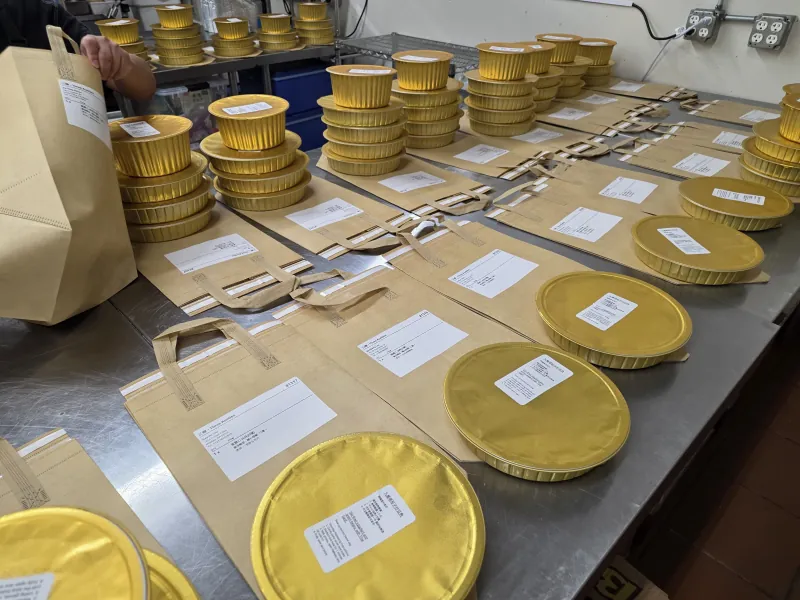
Three Aunties launched at the end of May 2026, serving pre-packaged Cantonese-style dinners. There are different dishes every day: customers pick one to three mains, and every order comes with a seasonal vegetable dish and a slow-simmered soup. Mains lean on Cantonese family staples like steamed fish, braised beef brisket, and steamed spareribs, with the occasional Sichuan, Taiwanese, or Southeast Asian dish in the rotation. Meals are delivered chilled, Monday to Friday.
The Chinese name, 三嬸, stands for three things Three Aunties saves its customers: worry, time, and effort.
“I always wanted to do something different, from the sushi all the way to Three Aunties,” Yuen says. “Everything is an adventure for me.”
Seeking sustainable growth
Three Aunties grew rapidly in the first month, marketing mainly in Facebook groups for new moms.
Demand is still growing, but Yuen is holding off on accepting new customers while he searches for the right kitchen team. “I never imagined how hard hiring is right now, especially in the Bay Area,” he says.
His goal for the end of the year is to have a stable kitchen team and double the number of families he serves.
How the delivery day works
Bay Area traffic is one of the reasons young families need a service like Three Aunties: commuters who leave work at 5 or 5:30 pm often aren’t home until 6:30, leaving little time to cook. And ordering takeout through delivery apps is “super expensive with all those fees,” Yuen says.
So the delivery day is planned to avoid traffic. Here’s how the process works:
- Order: Customers order through Three Aunties’ Shopify store, booking one or several days at a time. A new menu goes up every Wednesday at noon. Orders close at 10 am the day before delivery, Monday to Friday.
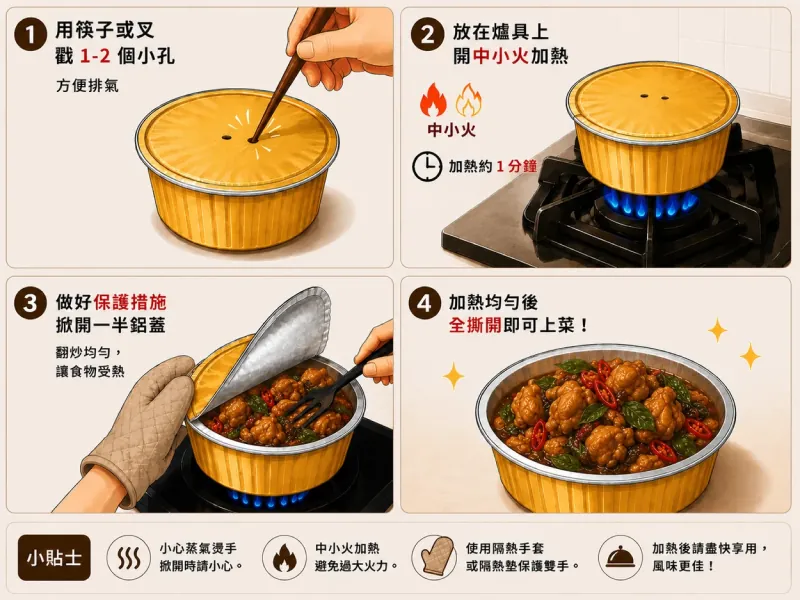
- Cook and chill: Meals are cooked each morning, sealed in aluminum trays with reheating instructions on the lid, and refrigerated below 41°F, in line with health department rules.
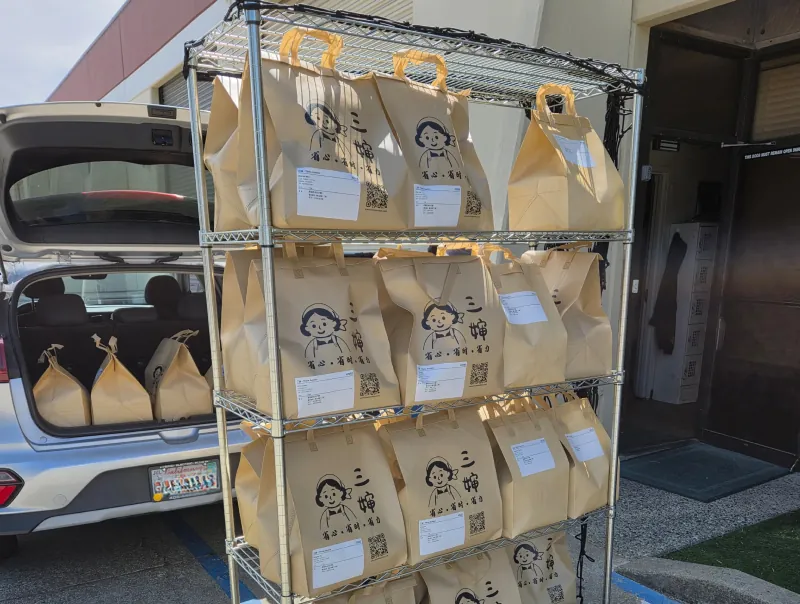
- Pack: Orders go into thermal bags with ice packs.
- Deliver: Drivers leave at 12:30 pm and finish by 6:30 pm. The six-hour window avoids the heaviest traffic and gets dinner there before parents need it.
- Cover the region: Two routes cover San Mateo County, Santa Clara County, and southern Alameda County, from Daly City to San Jose and across the bay to Fremont and Hayward, at roughly 85 miles per driver per day.
Three Aunties uses its own contract drivers, rather than a third-party delivery app. Cost is one reason, but the other is trust and control. Many customers live in apartment buildings, and Yuen wants meals delivered to the door, not left at the front desk.
“Imagine you’re a mother of two,” he says. “You need that bag right outside your door, not down at reception.”
Routific: “The right choice for small businesses like us”
Yuen first came across Routific in a comparison of Onfleet alternatives on its blog, while researching delivery management platforms. He chose it as the most affordable option for small businesses planning to grow. Routific’s free plan for up to 100 orders a month offered a low-risk start. “We’re a small business. I didn’t know how many orders I could do in a month, or even a day,” Yuen says. “So I started small.”
He had three main requirements:
- Notifications that tell customers when dinner is coming
- Spreadsheet import with order numbers and addresses
- Multi-vehicle routing
He started with email notifications, then switched to SMS when customers said they preferred texts. Each message links to a delivery tracker branded with the Three Aunties logo.
Orders get from Shopify to Routific through a workflow Yuen built himself. He used Claude to create an internal operations app that turns each day’s Shopify orders into a spreadsheet, which he imports into Routific to plan routes. He plans to give Routific’s native Shopify integration a try too.
Routes that respect driver preferences

Yuen drove the first week of deliveries himself, to experience the driver mobile app the way his team would. Drivers tell him it’s easy to use, and they didn’t need any training. It’s simple to take a photo for proof of delivery, mark each order as delivered, leave notes if necessary, and then move on to the next stop.
Routific gives him the flexibility to plan routes according to his drivers’ knowledge and preferences. For example, one driver prefers to cross the bridge into the East Bay first, then loop back through Milpitas and San Jose toward Palo Alto, where he lives. Yuen has used Routific’s patented Draw Route feature to create routes that match these preferences. He also uses the lasso tool to easily move stops between drivers.
💡 Selling on Shopify? Routific’s Shopify integration syncs your orders straight into route planning and marks them delivered or fulfilled when drivers finish. Start your free trial today.
What’s next?
Yuen says once the kitchen team is in place to grow the business, the software side is ready. “The sky’s the limit! We’re excited to continue growing Three Aunties and see how far we can take it. And I’m confident Routific can scale with me as I grow.”
Frequently Asked Questions
How do meal delivery businesses keep food safe during delivery?

Most food delivery businesses cook, chill, and deliver cold, so the customer reheats at home. Three Aunties refrigerates sealed meals below 41°F and delivers them in thermal bags with ice packs. Food safety rules vary by location, so check with your local health department.
When should a meal delivery business schedule deliveries?
Schedule around your customers’ mealtimes and your region’s traffic. Three Aunties delivers between 12:30 and 6:30 pm, which gets dinner to families before they need it and keeps drivers out of the worst rush hours.
Should a small food business use its own drivers or a delivery app?
Delivery apps are fast to set up but take a cut of every order and give you little say over how food is handed over. Running your own drivers costs more effort but lets you set delivery instructions, like bringing bags to the door instead of the lobby.
Do small meal delivery businesses need route planning software?
Once you’re running more than one route, planning by hand gets slow and error-prone. Routific’s free plan covers up to 100 orders a month, so a new business can start optimizing routes before it knows its volume.
Can I plan delivery routes from Shopify orders?
Yes. Routific’s Shopify integration imports orders automatically and sends delivery status back to Shopify, so you don’t have to re-key addresses or update orders by hand.
How to Start a Catering Business: From Licensing to Delivery Logistics

How To Start A Food Delivery Service: 8 Steps To Success

Best Route Planning Software For Last Mile Delivery Businesses in 2026



Want to learn more?
Read our Ultimate Guide to Route Optimization
- What is route optimization?
- Algorithms vs humans
- Intelligent route optimization
- Choosing route optimization software
Slash delivery costs by 25% – starting today
No credit cardSet up in minutesCancel anytime